
Inside one of Abitibi-Témiscamingue’s most moving wildlife experiences
Are you seeking out an educational and inspirational adventure in Amos? Let me introduce you to Refuge Pageau.
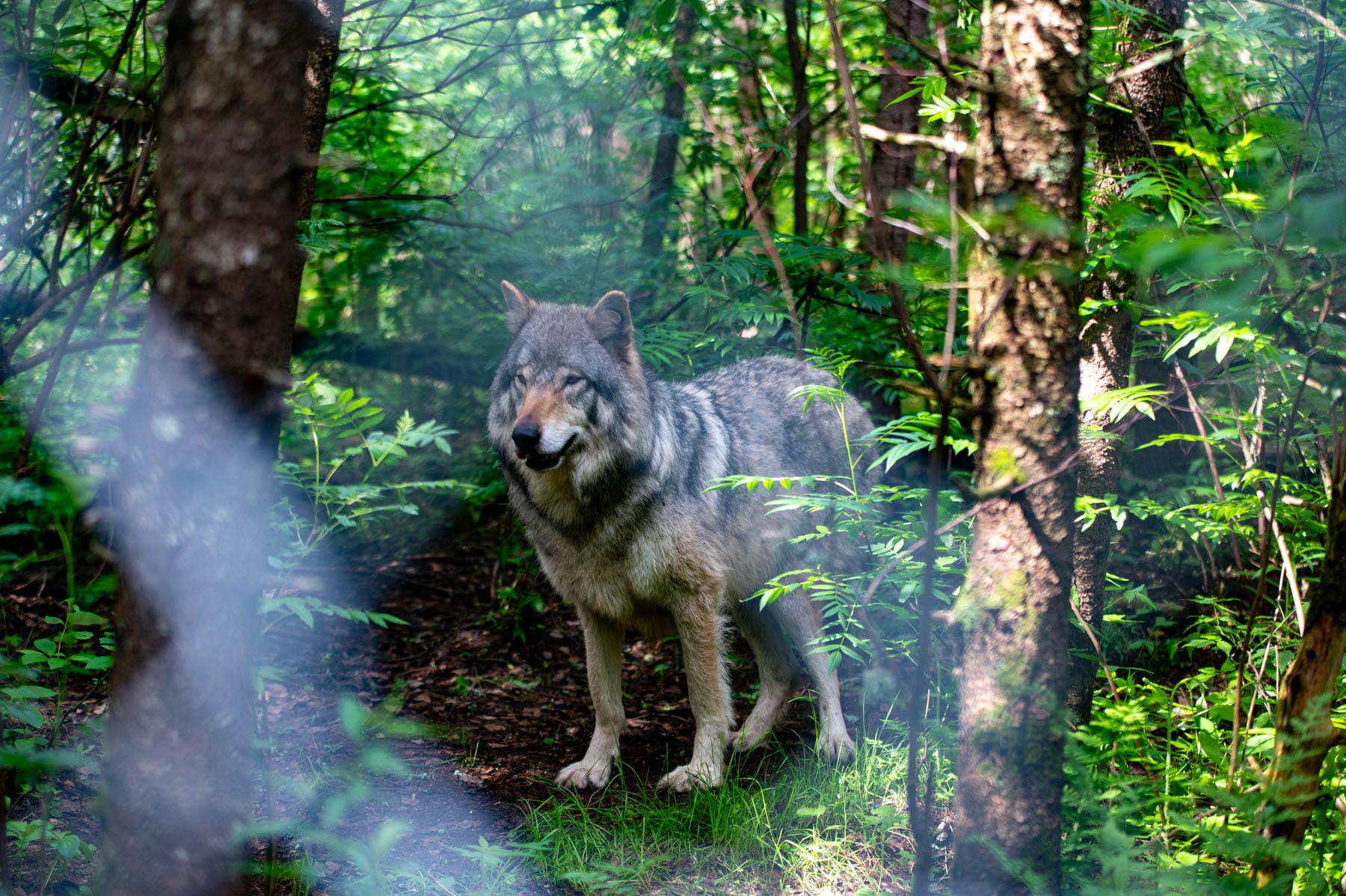
Refuge Pageau in Quebec’s Abitibi-Témiscamingue region, is not a zoo. It says so itself, repeatedly, and once you’re inside, you understand why the distinction matters so much to the people who run it. This is a wildlife rehabilitation centre with one job: take in injured, orphaned, and displaced animals from the boreal forest, give them a real shot at healing, and release them back into the wild whenever that’s possible.
When it isn’t, the animals that can’t go back become permanent residents — and become teachers, in their own way, for everyone who walks through.
I’ll admit I’d pencilled this in as a half-day stop on a much longer itinerary, one of several attractions on a road trip through Abitibi-Témiscamingue that I figured I’d appreciate and then move on from. That’s not what happened. By the time I left, I understood why locals bring their own kids here again and again and why the parking lot was full of families on a regular weekday morning.
If you’re planning a road trip through Abitibi-Témiscamingue, this needs its own half-day, minimum. Here’s everything I experienced, and everything you should know before you go.
Refuge Pageau: Your 2026 Guide to Visiting The Wildlife Sanctuary
Refuge Pageau traces back more than 30 years to Michel Pageau, a former trapper who, along with his wife, made an unlikely pivot from harvesting wildlife to devoting his life to saving it. That backstory matters — it’s not an outsider’s conservation project dropped into the boreal forest. It’s the work of someone who knew this land and these animals intimately first, then chose to spend the rest of his life undoing harm instead of causing it.
Today, the refuge operates as a working rehabilitation centre and an educational stop for the public, with the dual mission stated plainly everywhere you look: care for injured and orphaned wild animals with the goal of returning them to the wild, and when that’s not possible, give them a permanent home and put their story to work teaching the next generation of hunters, hikers, and curious travellers how to coexist better with the wildlife around them.
Arriving at Refuge Pageau: The First Surprise Before You Even Get Inside
I pulled into the parking lot already feeling like I’d undersold the place to myself. There were families unloading strollers and snacks, clearly settling in for a real visit rather than a quick photo stop. As a rule, when you see a lot of locals at a tourist attraction, it’s a good sign — it means the place has earned its reputation with the people who could easily skip it.
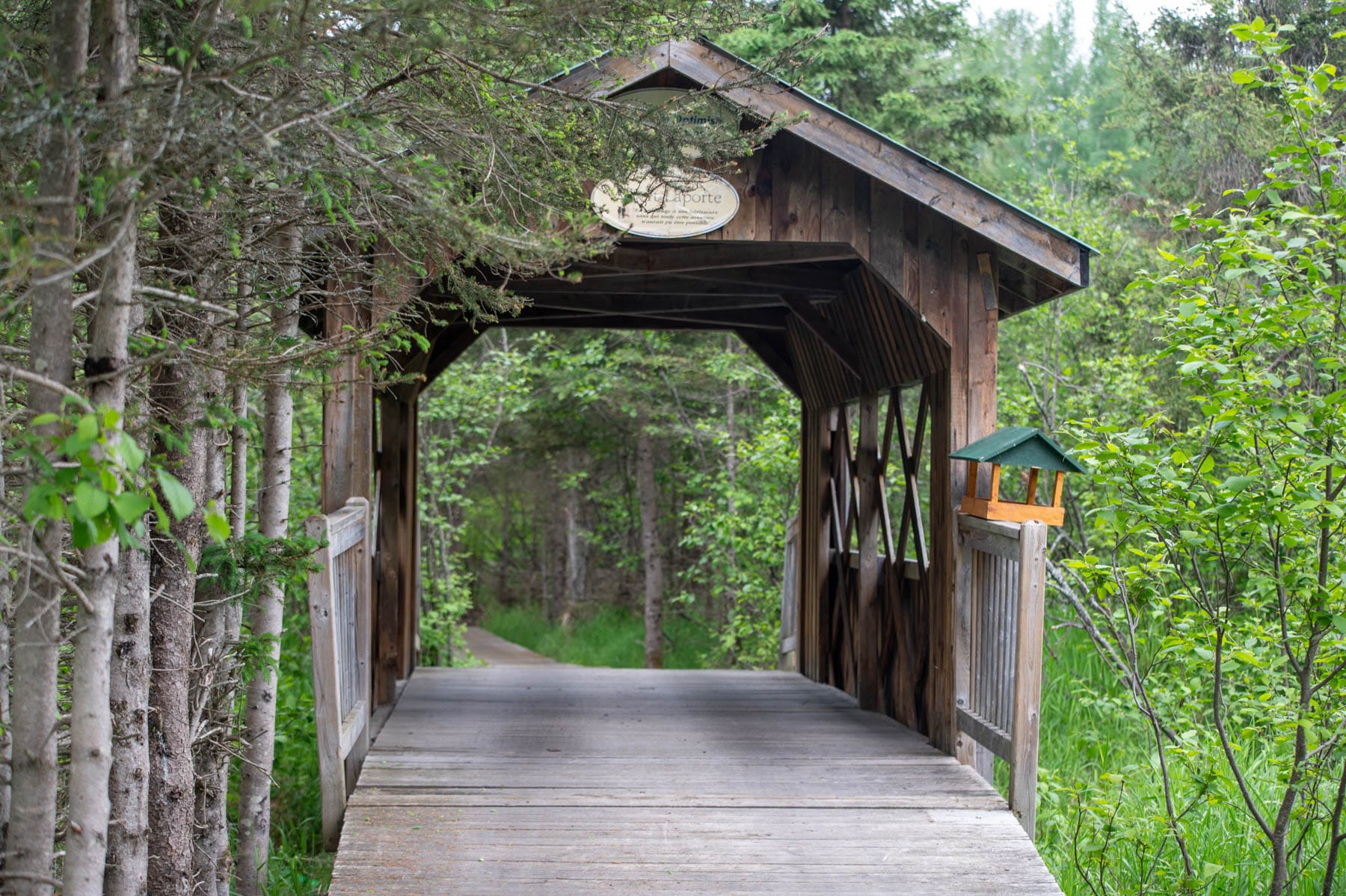
My guide, Mylène met me for what turned into a deeply personal walking tour rather than a scripted recitation. We hadn’t even made it past the entrance bridge before the refuge delivered its first unscripted moment: a wild baby red fox darted out from underneath the bridge and bolted into the forest. For a second, I assumed the animals here might roam semi-freely within the property. They don’t — this was a genuinely wild fox that had simply found its way onto the grounds. My guide, who’s worked there for fifteen years, said she’d never seen that happen before. So we were both a little starstruck before the official tour had even started.
Meet the Residents: The Animals Who Call Refuge Pageau Home
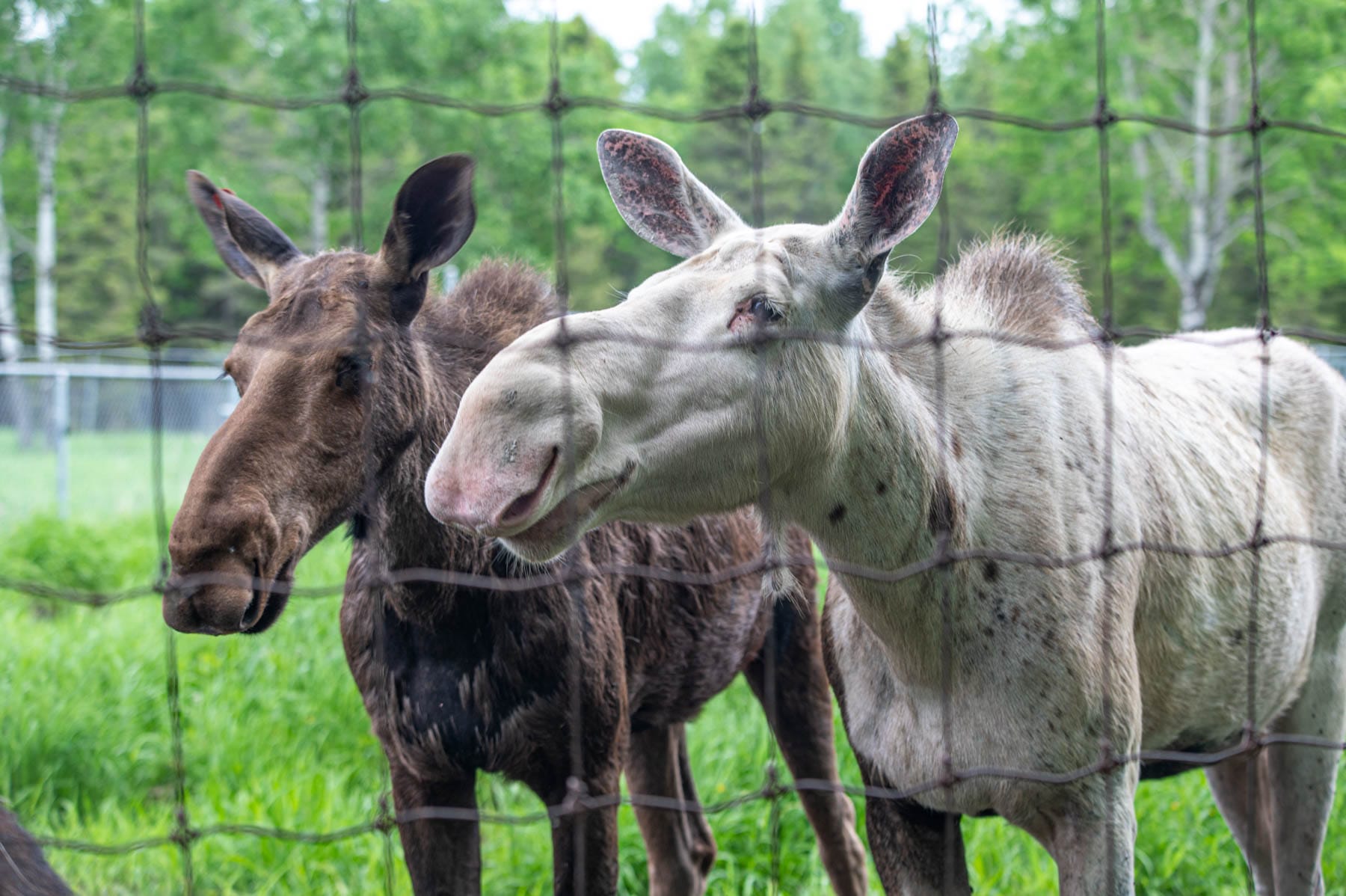
The refuge splits its population into two very different categories, and understanding that split is key to understanding what makes this place special. Some animals are permanent residents — too injured, or too imprinted on humans, to survive if released. These are the animals you’ll meet face-to-face, and their stories are the heart of the visit. Others are in active, quiet rehabilitation, kept in spaces designed for minimal human contact, working toward release back into the wild. You won’t interact with those animals directly, and that’s intentional — more on that below.
Stitch, the Black Bear Who Acts Like a Golden Retriever
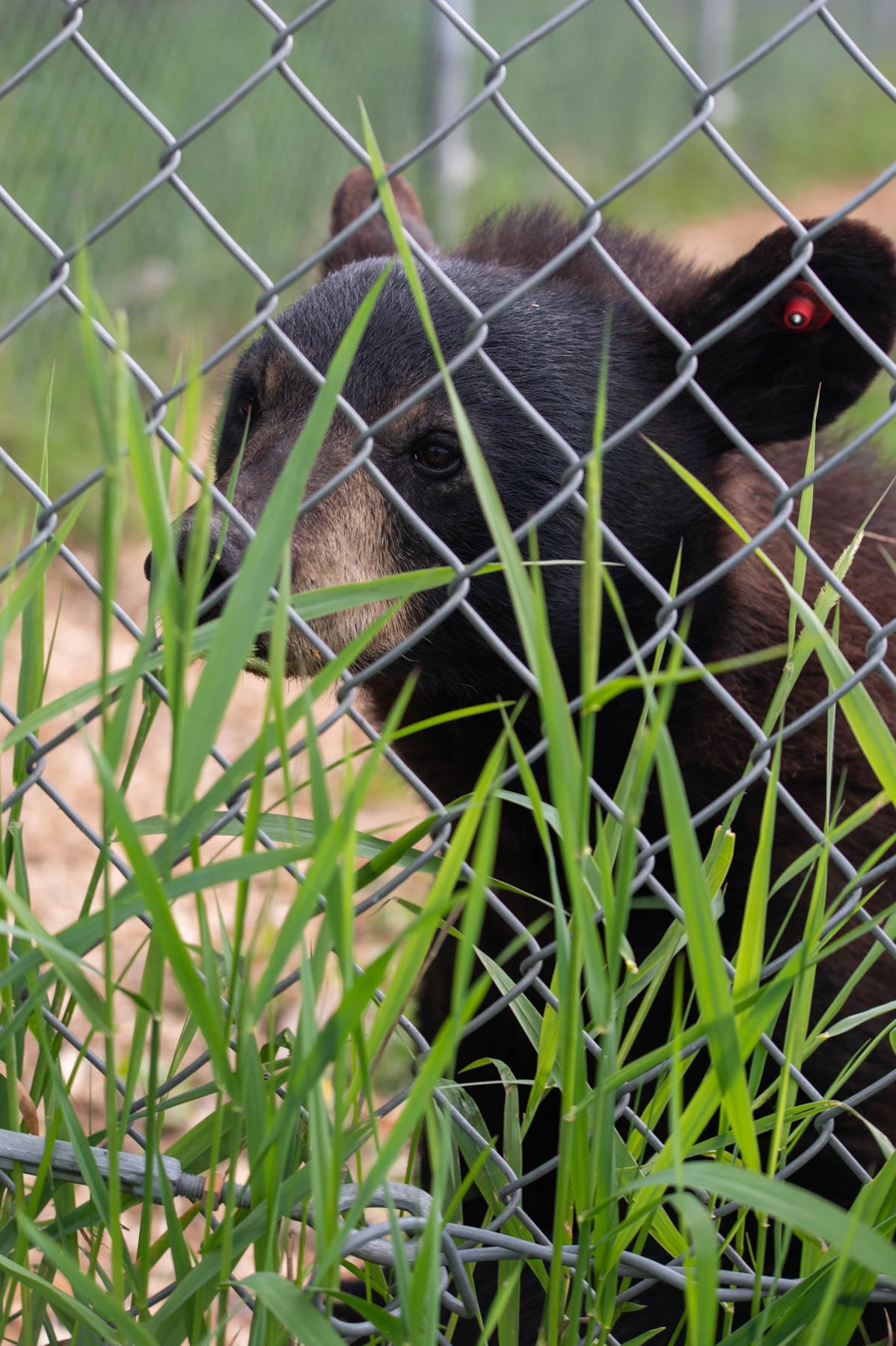
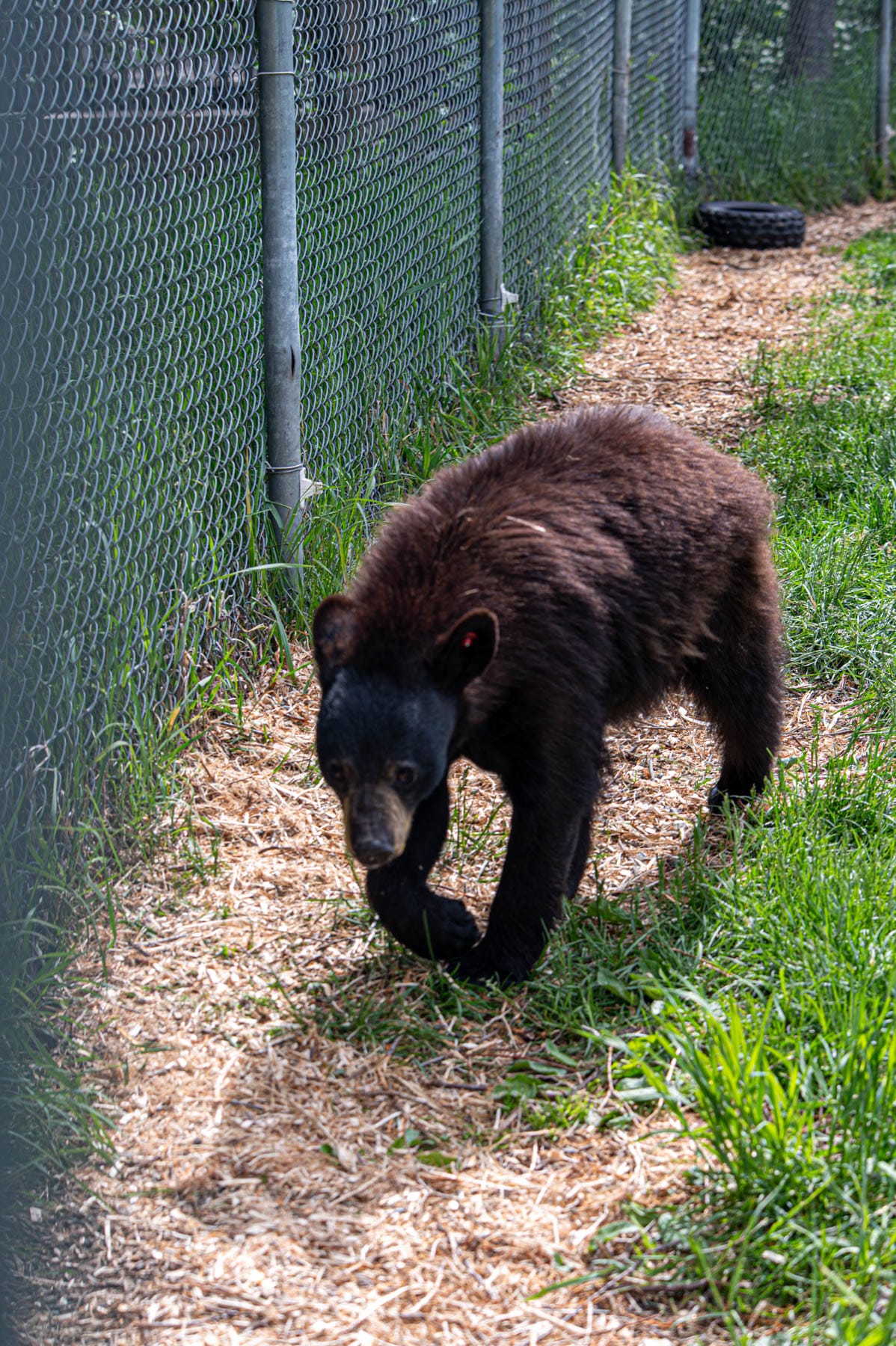
Stitch is a two-year-old black bear, and she is, without exaggeration, one of the most affecting animals I’ve ever been near. Her mother was killed by hunters when Stitch was still a cub. She was taken in by well-meaning humans afterward, but kept far too long — long enough that she became fully imprinted on people, comfortable around them in a way that would make her dangerously vulnerable if she were ever released. The refuge’s rehabilitation attempts couldn’t undo that. So Stitch lives here now, permanently.
When we reached her enclosure, she came straight to the fence, practically pressing herself against it, clearly wanting attention the way a dog wants attention. She was within six inches of my face at one point. We chose to observe rather than touch — that’s the right call around any wild animal, however tame they seem — but it was, genuinely, a once-in-a-lifetime kind of closeness.
It’s a complicated thing to sit with. Stitch is beautiful, playful, and clearly loves the humans who care for her. She also should never have ended up this way. The fact that her story now gets used to teach hunters and families about protecting bear populations in the wild is the only part of this that makes it feel less like a tragedy and more like purpose.
The Moose Who Wanted Her Photo Taken
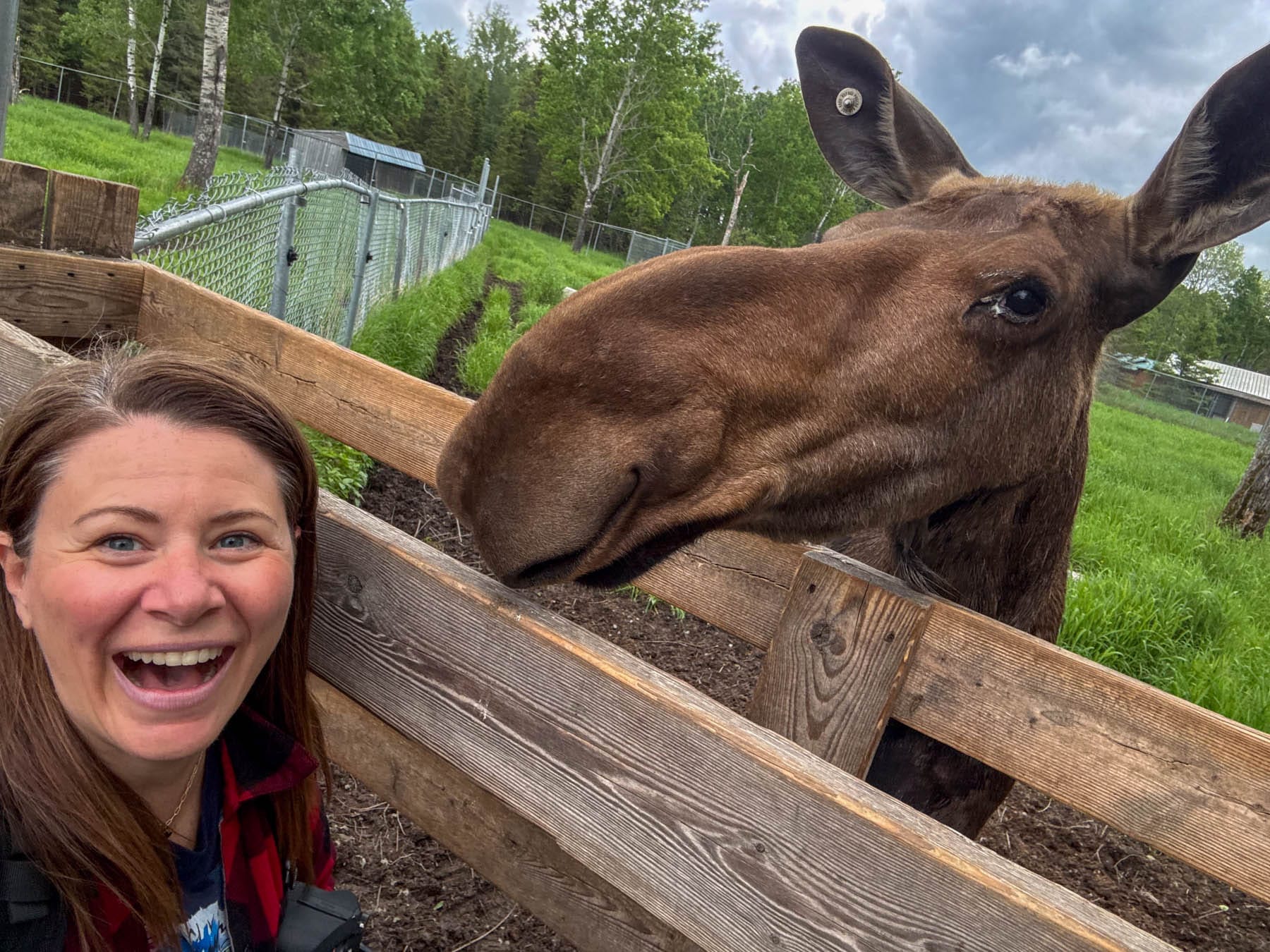
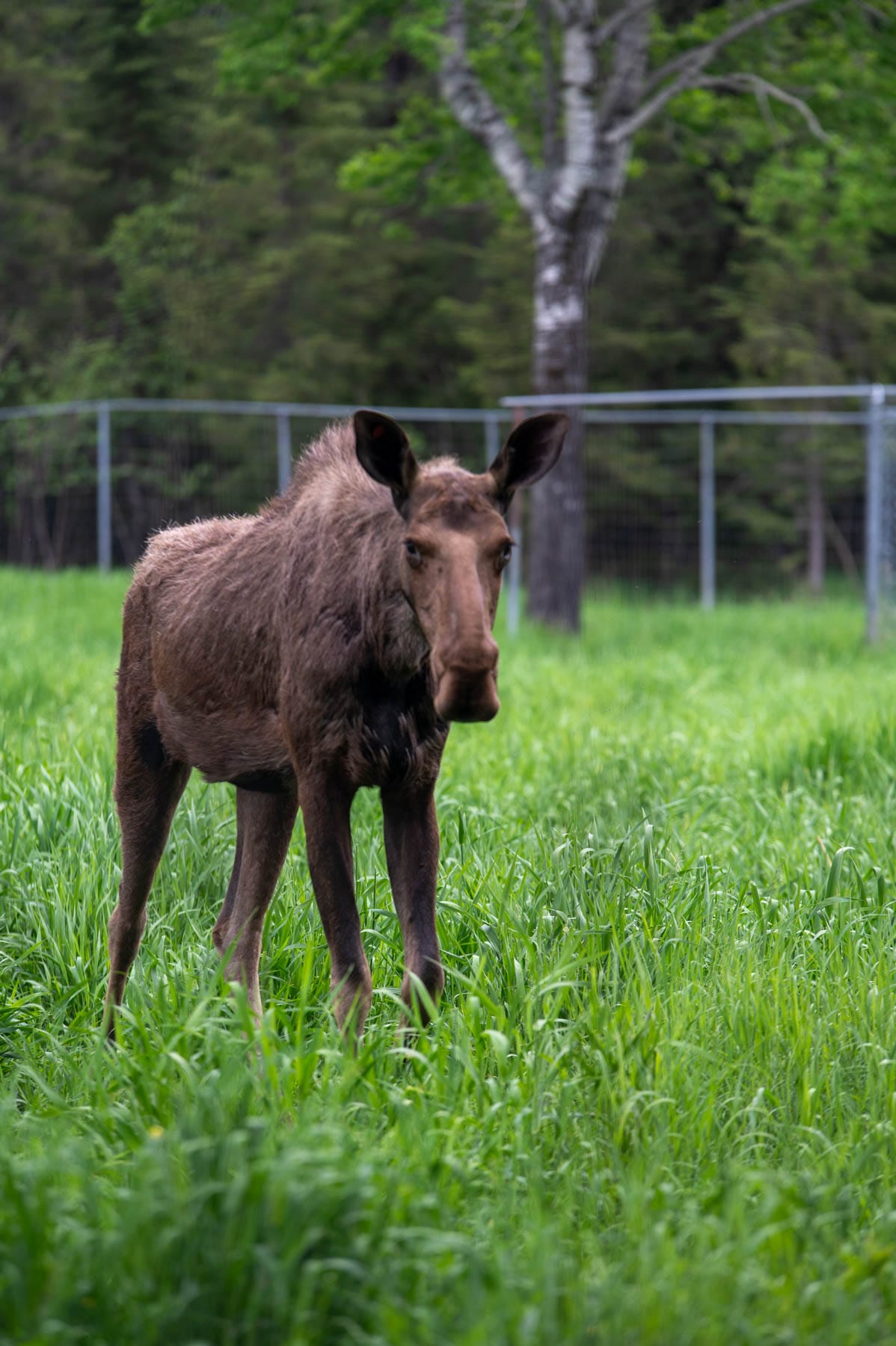
If Stitch surprised me with her affection, the resident moose did the same in an entirely different way. Like Stitch, she was orphaned young — her mother killed, leaving her unable to survive independently in the wild. I expected something timid and distant. Instead, she came running over the moment we approached, clearly excited and clearly familiar with my guide.
I got to step behind the scenes and take a selfie with her — genuinely one of my favourite photos from the entire trip. She’s enormous and gentle at once, the kind of animal that completely resets your expectations of what a moose encounter could feel like.
Billy the River Otter’s Water Ballet
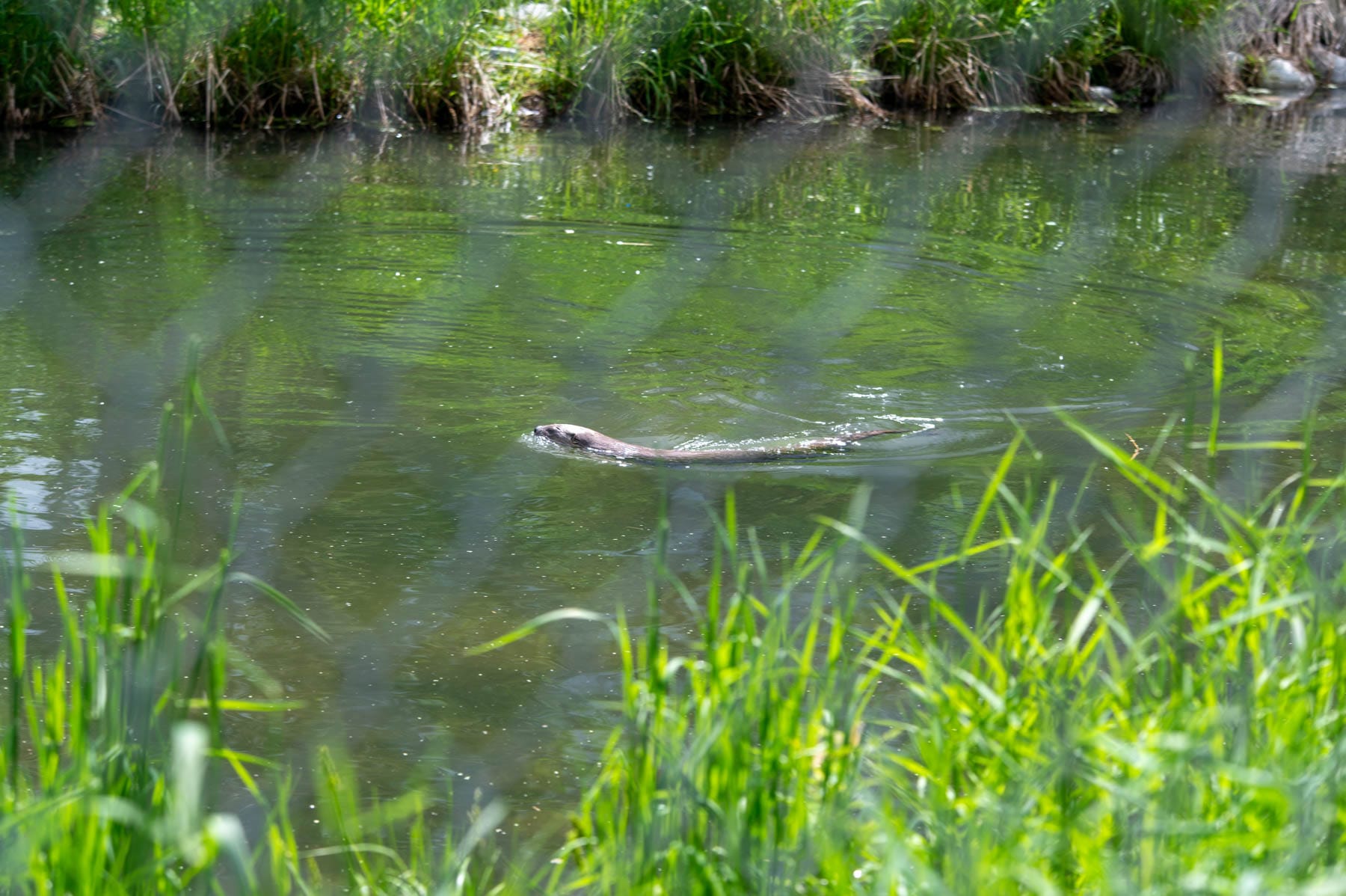
Billy is a river otter, and the moment we rounded the corner toward his stretch of river, my guide called out to him by name. He popped his head up almost instantly, said his version of hello, and then proceeded to put on a full performance — diving, twisting, gliding through the water like he knew exactly how charming he was being. It’s hard to overstate how delightful this was to watch.
The Birds, the Three-Legged Fox, and the Animals Who Teach by Example
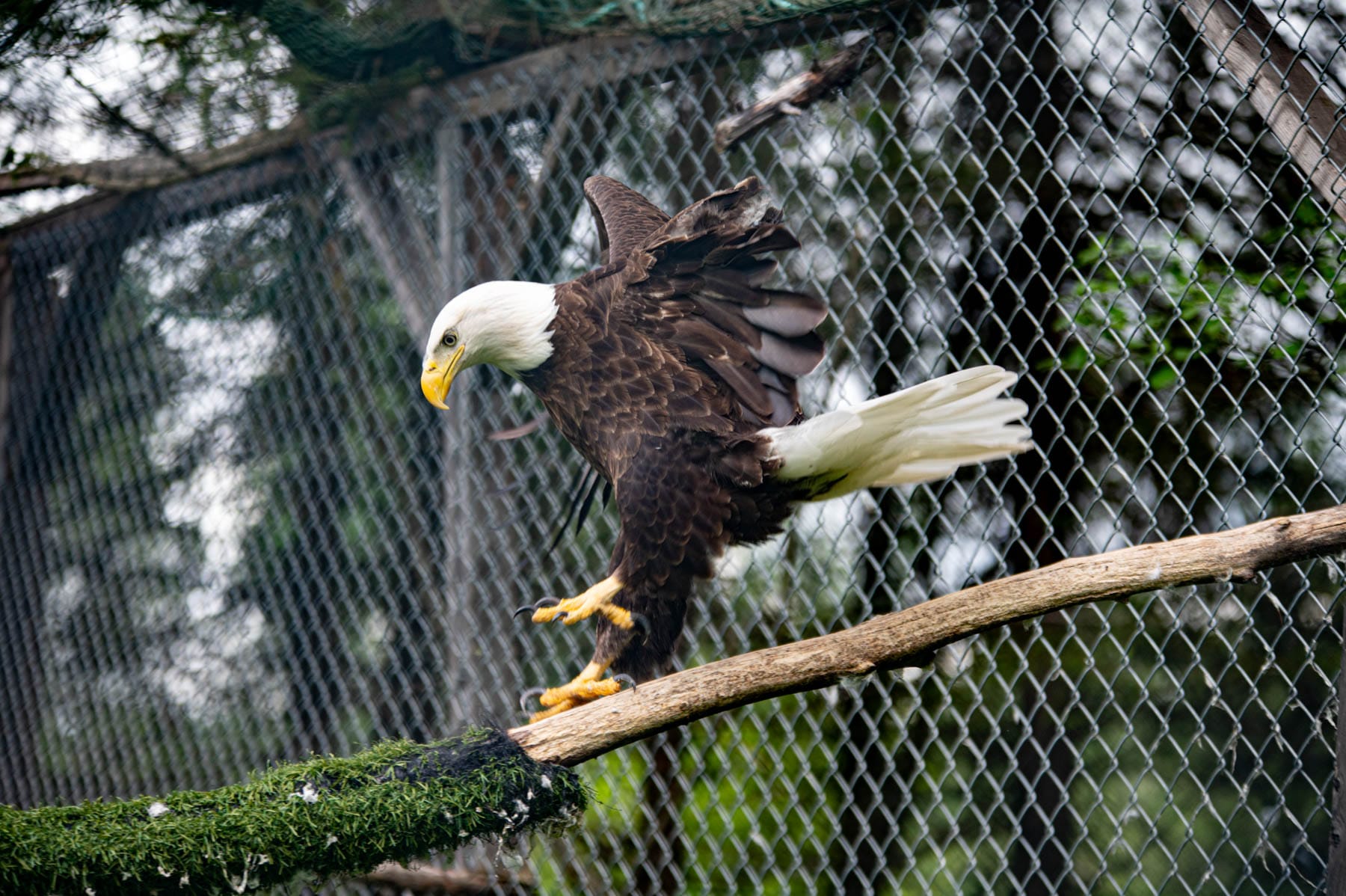
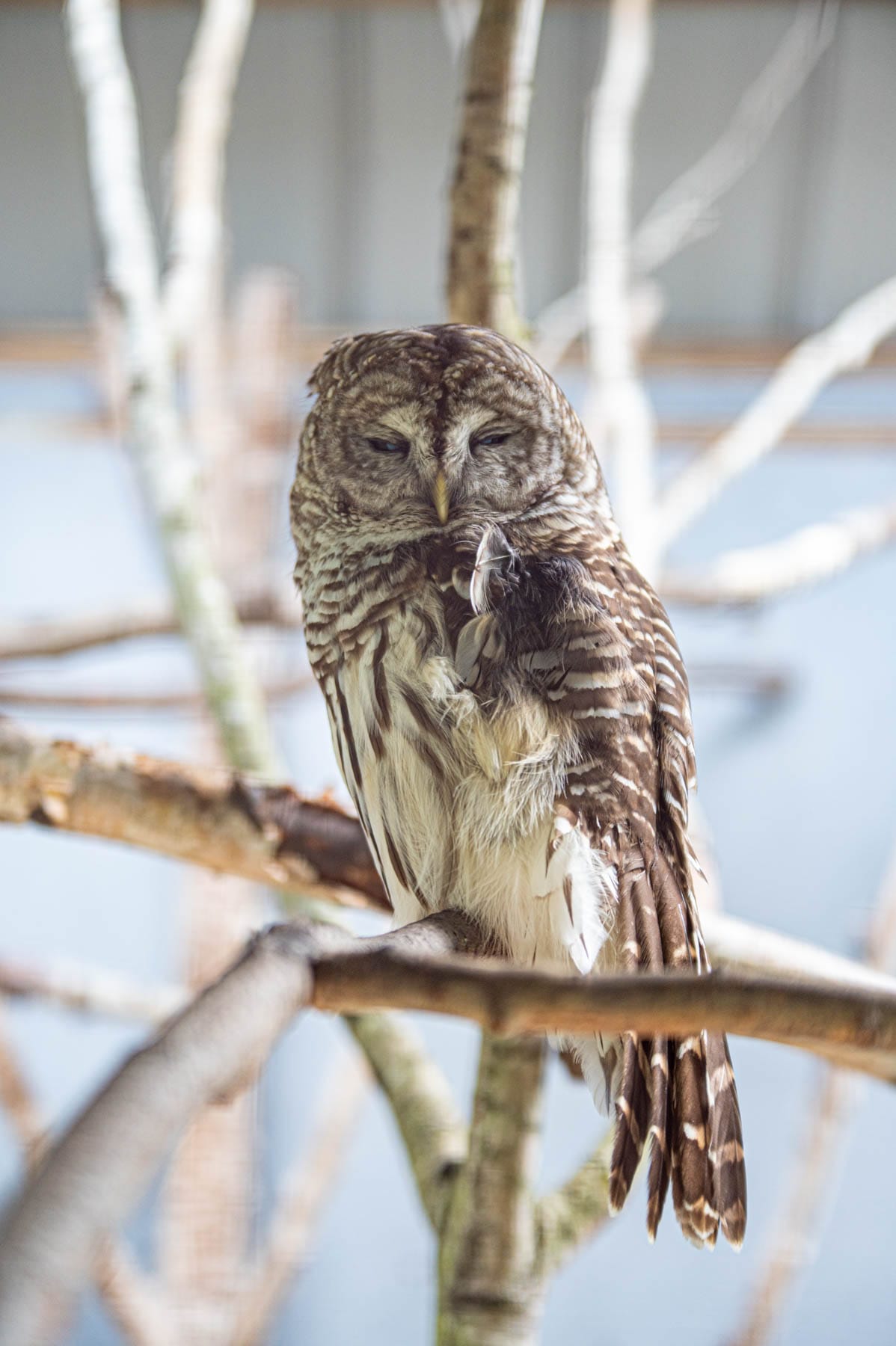
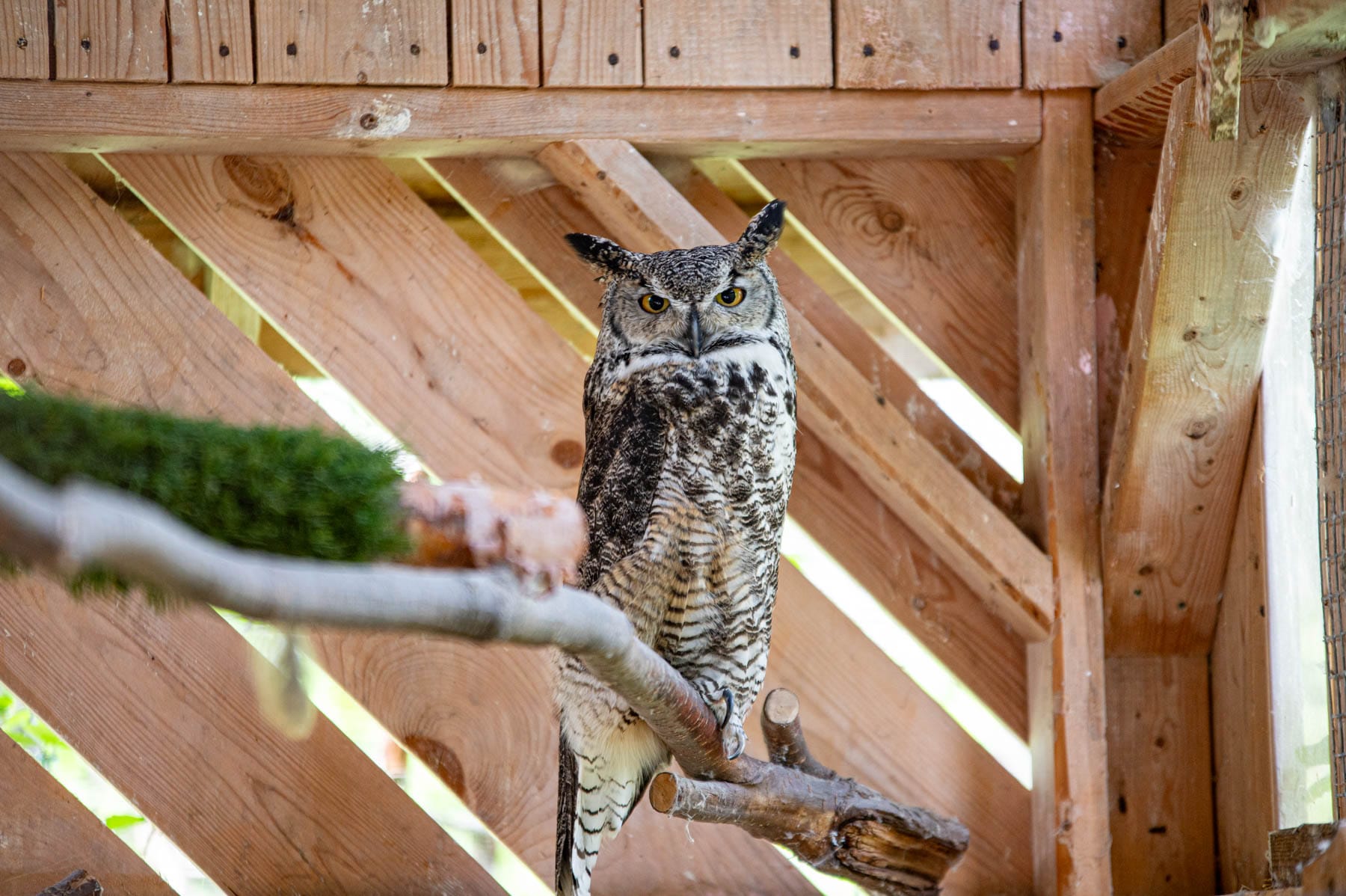
Beyond the headline animals, the refuge is full of smaller, quieter stories. There’s a bird with a permanently injured wing who can no longer fly. A fox who lost a hind leg to injury before arriving and now gets by fine on three. Crows who can’t be released and who, it turns out, genuinely enjoy being scratched behind the ears by staff who clearly know and love them individually.
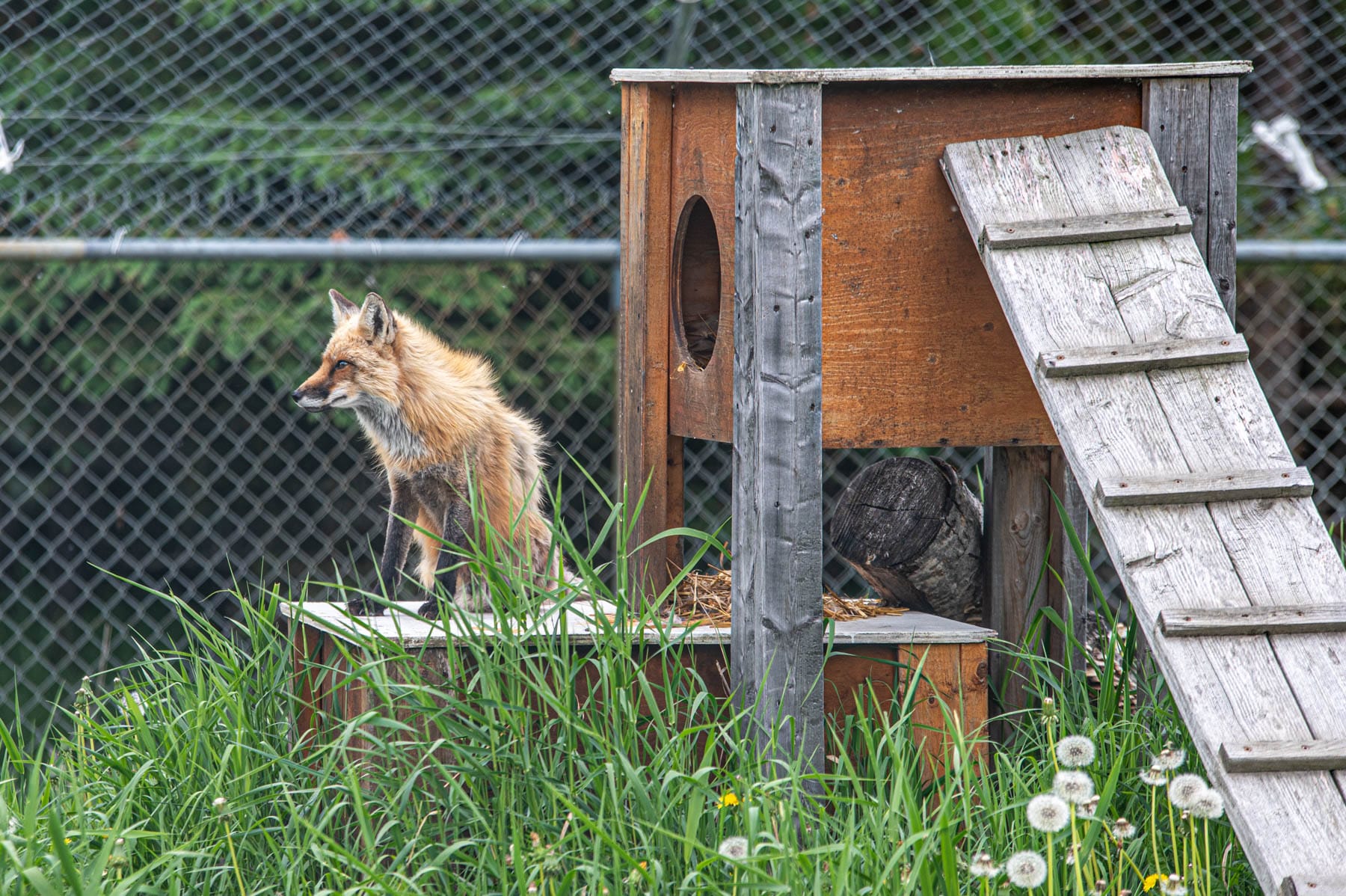
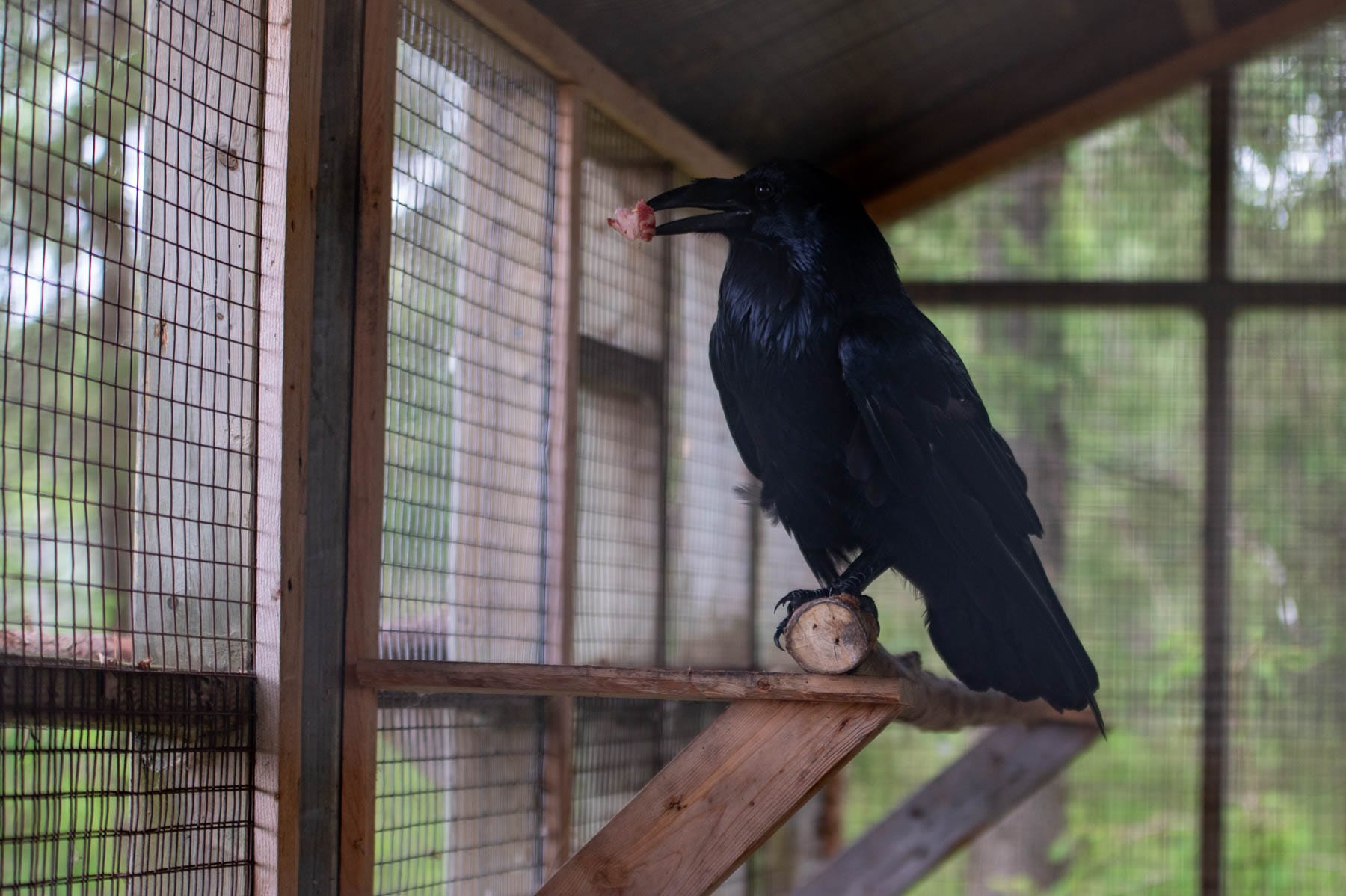
What struck me most was how well the staff know each animal — not as exhibits, but as residents with names, personalities, and histories. One staff member walked straight up to a resident crow mid-tour just to give it some affection, the way you’d check in on a pet. That’s not something you fake for visitors. It’s clearly just how they operate every day.
The Other Half of the Story: Rehabilitation in Progress
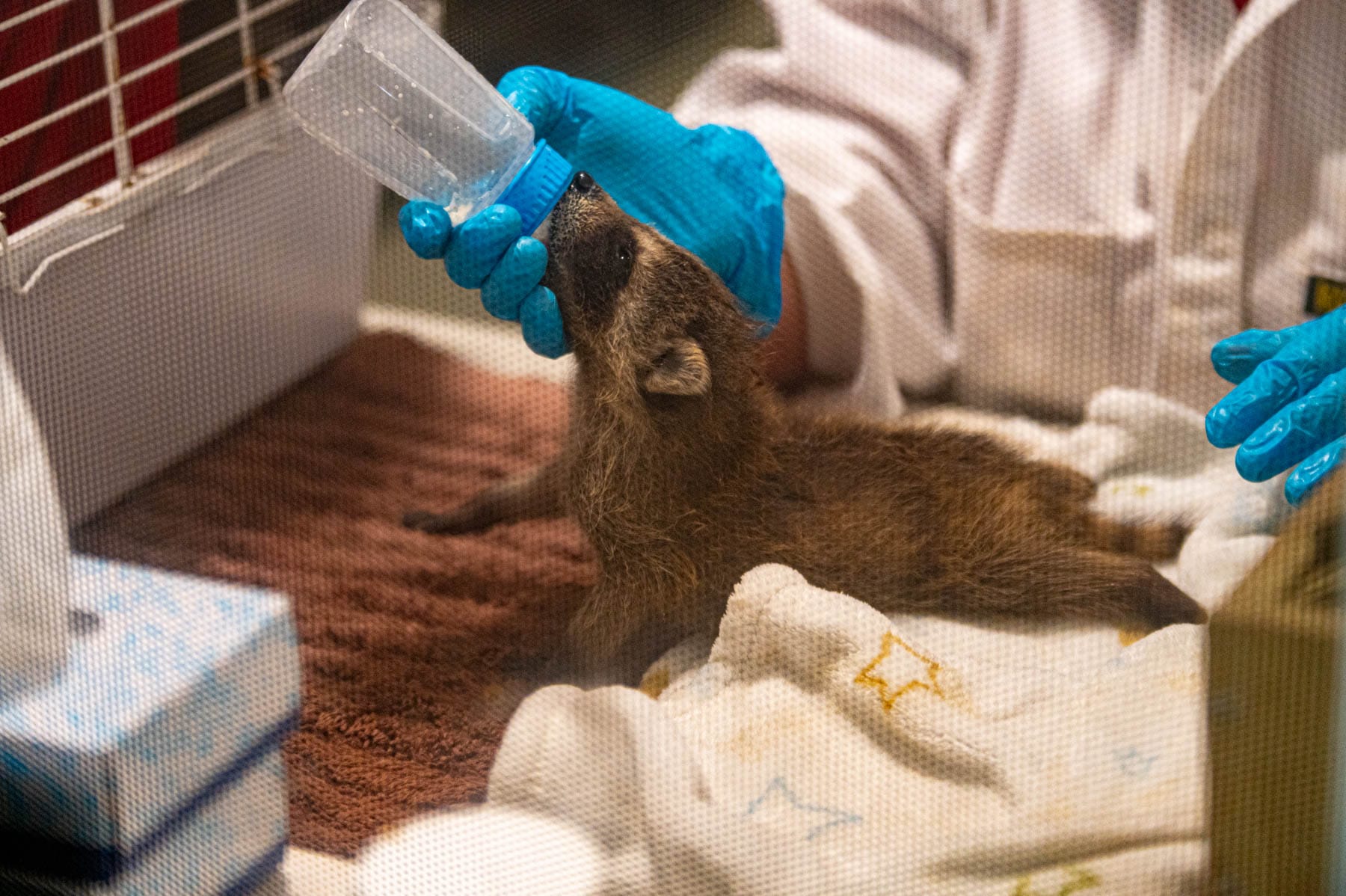
Here’s where Refuge Pageau distinguishes itself from almost anywhere else you’ll visit on a trip like this. Alongside the residents you meet directly, there’s an entire side of the operation dedicated to animals who are not on display — quiet zones with one-way glass, where the animals can’t see or sense the visitors at all, designed specifically to prevent the kind of imprinting that happened to Stitch.
My guide walked me through this part with visible pride, and it changed how I understood the whole place. Several of the clinical care spaces were empty the day I visited — and that emptiness, she explained, is the actual goal. A skunk had been released the week before. Four raccoons before that. The refuge doesn’t want a full house. A full house means animals still need them.
At the time of my visit, three baby bears were in care, not quite old enough for release yet, but scheduled to go back into the wild that July. My guide explained the process in detail: the refuge works directly with local conservation officers, who track regional wildlife populations and identify where specific species are declining or where habitat is best suited for a successful release. Once bears are returned to the wild, they’re tracked — sometimes individually, sometimes as siblings who choose to stay together for a while before splitting off on their own — until they outgrow the tracking equipment and are considered fully independent.
This is the part of the visit that, more than any single animal encounter, explains why Refuge Pageau matters. The headline animals get people in the door. The quiet, unglamorous rehabilitation work happening alongside them is the actual mission.
The Gift Shop: A Fundraiser Worth Supporting
I wasn’t expecting to find anything in the gift shop beyond the usual hoodies and magnets — and there were some of those too — but I spotted a beautiful blue plaid flannel shirt with “Refuge Pageau” stitched into it and had to take a closer look. It turned out to be secondhand clothing, sold specifically as a fundraiser for the refuge’s ongoing work. For fifteen dollars, I walked out with a great flannel and the knowledge that the money was going straight back into animal care. If you’re someone who already leans toward secondhand and sustainable shopping, this is an easy way to support the refuge beyond your admission ticket.
Why This Isn’t a Zoo, and Why That Distinction Matters
The refuge’s stated goal, more than once, is to eventually have empty rehabilitation rooms — not because they’ve stopped caring, but because that emptiness means the animals that came through made it back to where they belong. That’s a strange and rare thing to hear a wildlife attraction say out loud, and it’s the single biggest reason this stop earns the time it asks for.
There’s also something to be said for how the refuge talks about its own founding. A former trapper choosing to spend the back half of his life undoing the kind of harm his earlier career was built on isn’t a marketing story — it’s a genuine reckoning, and it shows in how seriously the place takes its mission decades later. Nothing about the visit feels performative. Nobody’s trying to sell you a photo op. The staff talk about population tracking and release windows with the same ease most people talk about the weather, because for them, it is the weather — it’s just what the job looks like, every single day, season after season.
That’s a different energy than you’ll find at most wildlife attractions, where the line between conservation messaging and entertainment can blur fast. Here, the entertainment — if you want to call a moose selfie or an otter’s underwater performance “entertainment” — is really just a byproduct of animals living comfortably enough in care to be themselves around people. The actual point of the visit is everything happening one level deeper: the tracking, the release planning, the conservation officer partnerships, the quiet rooms designed to stay empty.
Planning Your Visit
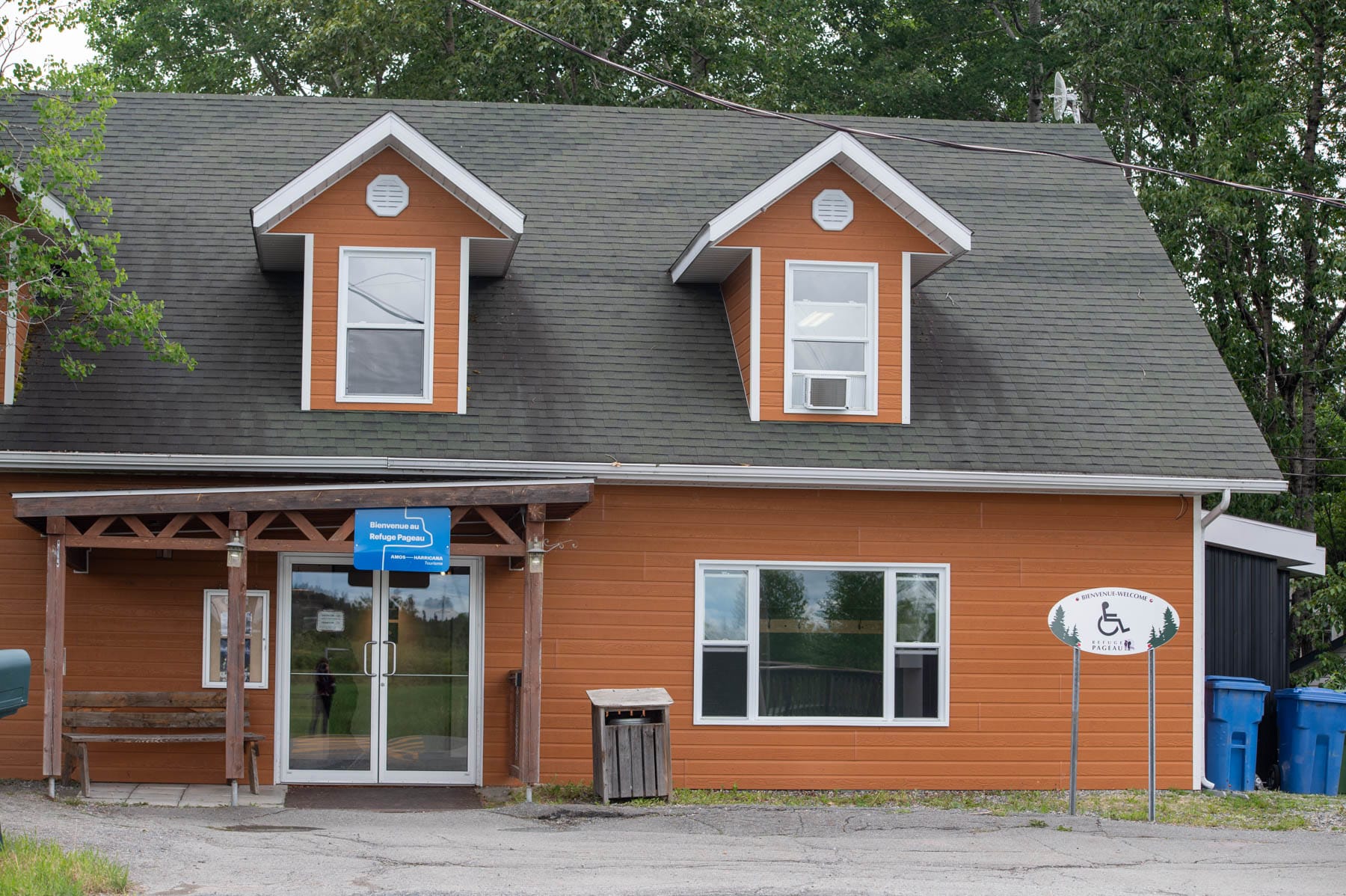
A few practical notes to help you build this into your own Abitibi-Témiscamingue itinerary:
- Location: 4241, ch. Croteau, Amos, Québec, J9T 3A1
- Phone: 819-732-8999
- Time needed: Plan for at least 2.5 to 3 hours; some visitors with private guided tours have stayed 4+ hours
- Hours and admission pricing: Open everyday from 1pm – 5pm Ticket Prices: Adults: $30.44+ tax, Children 6-17: 19.13 + tax, Children 2-6: $13.91+ tax, Infants under 2: Free. Family 2 adults, 2 children: $80.02 +tax.
- Accessibility: The site is accessible to visitors with disabilities, with a wooden boardwalk trail throughout
- Parking: free parking on-site, including bus and RV parking
- Bring cash or card — both are accepted, but check current payment options when booking
- Consider asking about private or behind-the-scenes guided tours if you want the kind of close encounters described above; standard self-guided visits may have a different format
- Bug spray and comfortable walking shoes — the trail is mostly outdoors and wooded
Is Refuge Pageau Worth the Stop?
Unreservedly, yes. This isn’t a quick add-on between two other stops — it’s the kind of place that recalibrates how you think about wildlife encounters for the rest of your trip. I went in budgeting twenty minutes in my head and stayed for the better part of an afternoon, and I’d do the same again without hesitation.
If you’re building a road trip through Abitibi-Témiscamingue, put Refuge Pageau on the itinerary with real-time attached to it. Bring your camera, bring tissues if you’re as soft-hearted as I am, and be ready to leave with a completely different understanding of what it means to give an injured wild animal a second chance.
This experience was made possible thanks to Tourism Abitibi-Témiscamingue. As always, all opinions, stories, and recommendations are 100% my own.