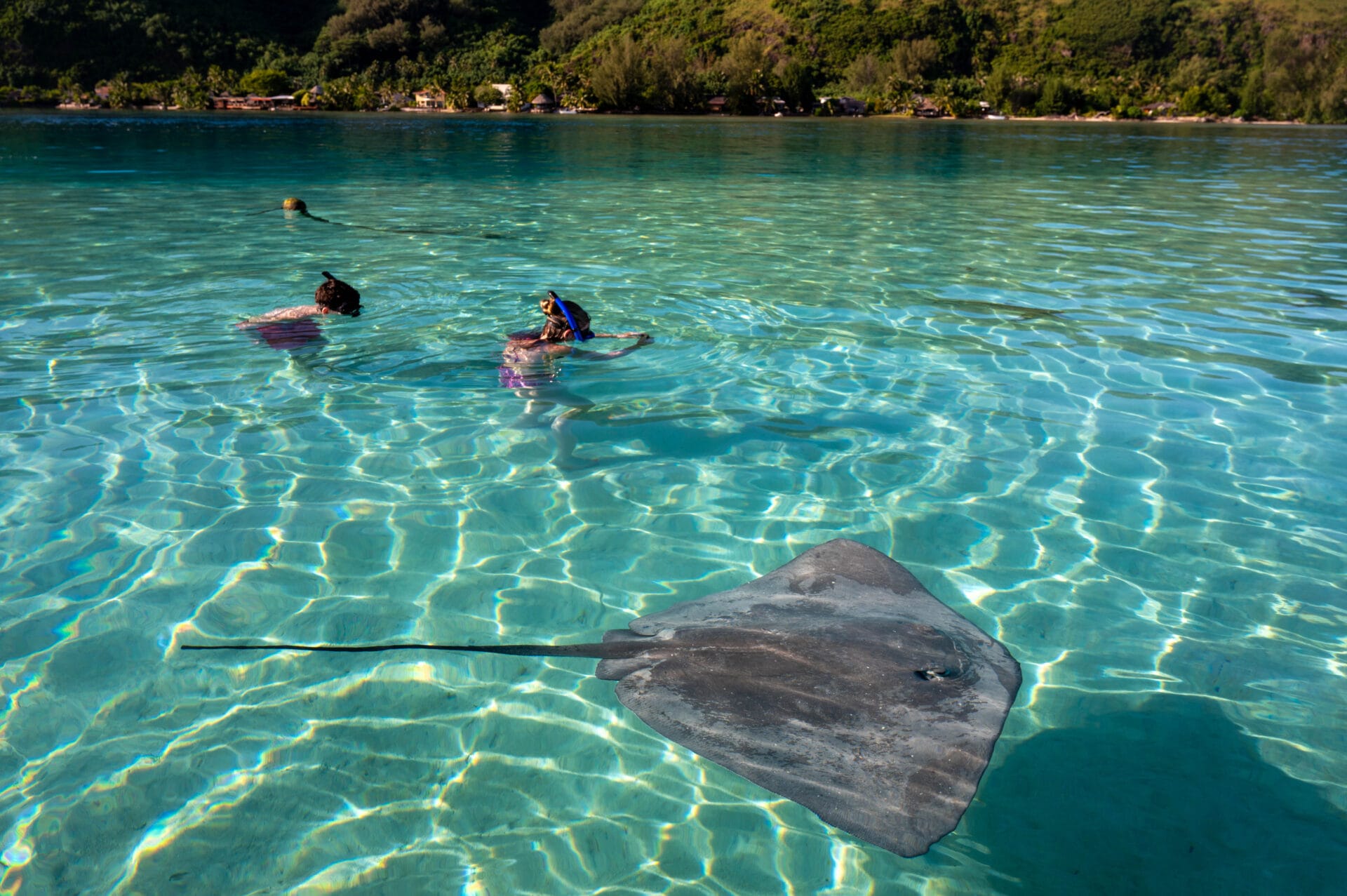

It was 9 am, and we were swimming with stingrays, basking in the warm sun and the beautiful light as it twinkled off the teal waters. We had only landed at Faa’a airport a mere four hours before, giving us enough time to check in to our hotel, drop off our bags, and then get make our way to our snorkeling tour in Tahiti! Talk about an epic way to kick off a vacation!
Tahiti Snorkeling & Whale Tour – The Best Snorkeling Tour In Papeete
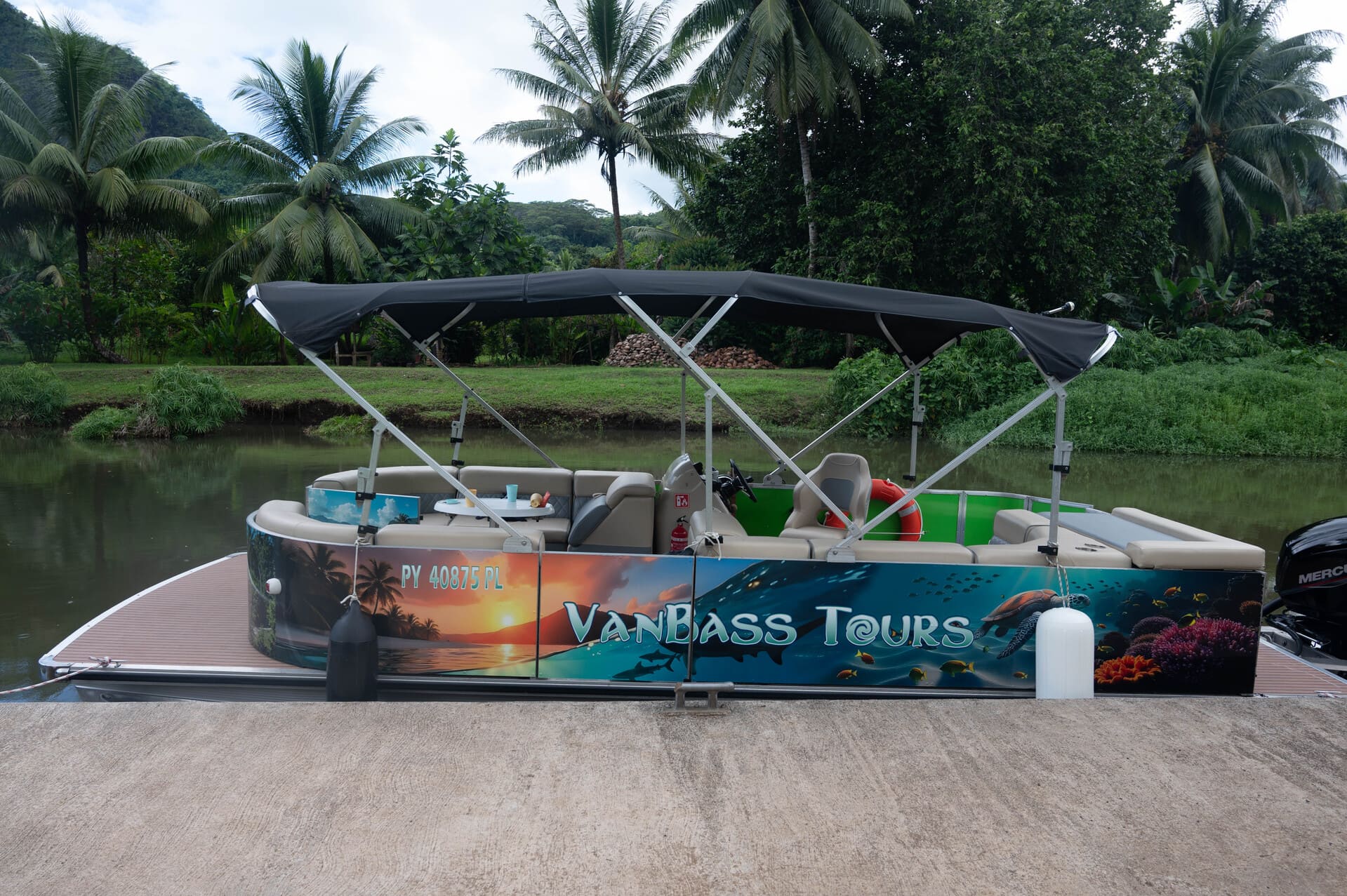
Our guide and boat captain for the day was Keanu. From the moment we boarded the boat, it was clear we were in good hands — someone who grew up in these waters and wanted us to experience with the same admiration that he had.
What the Tour Actually Looks Like
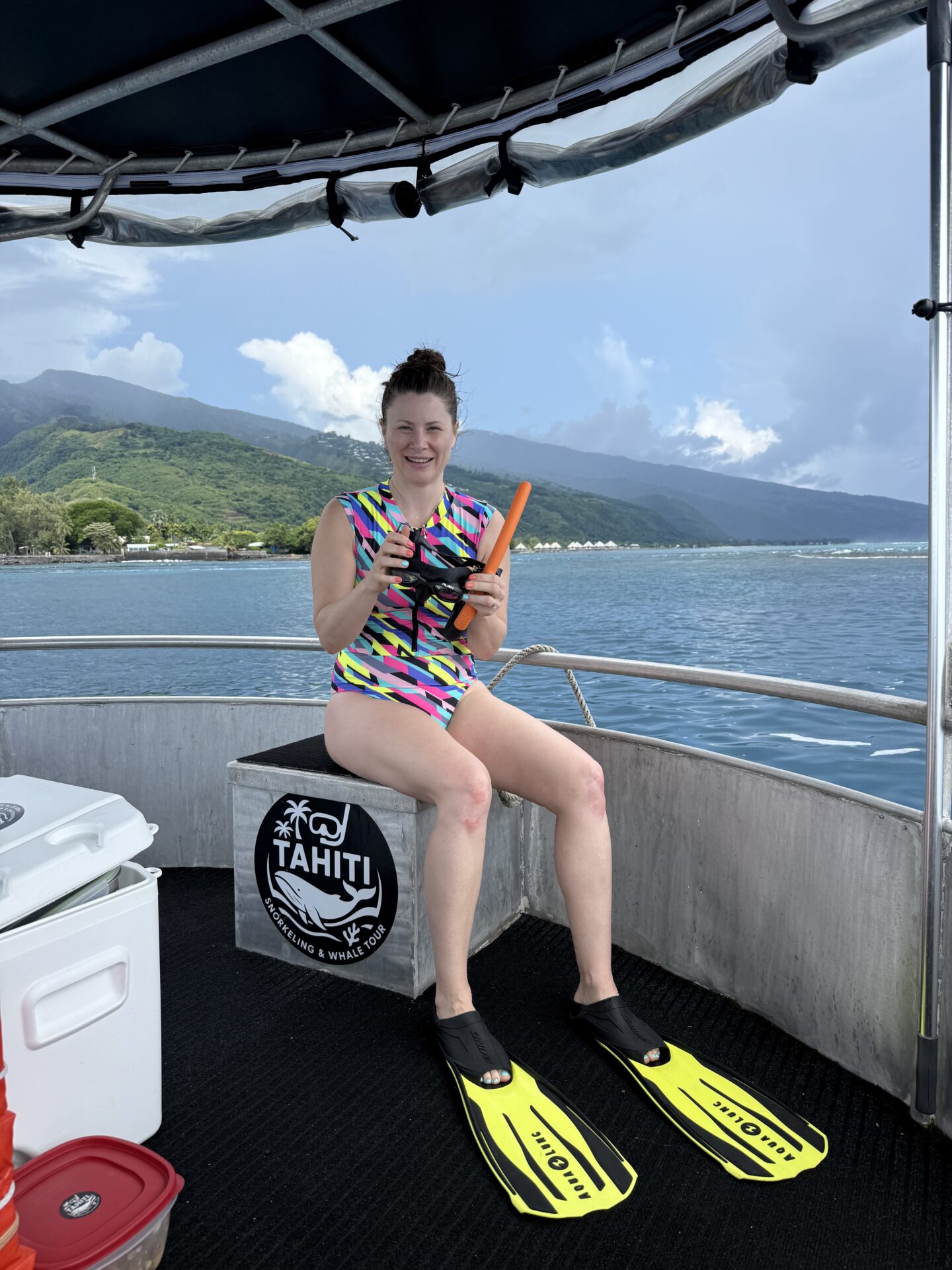
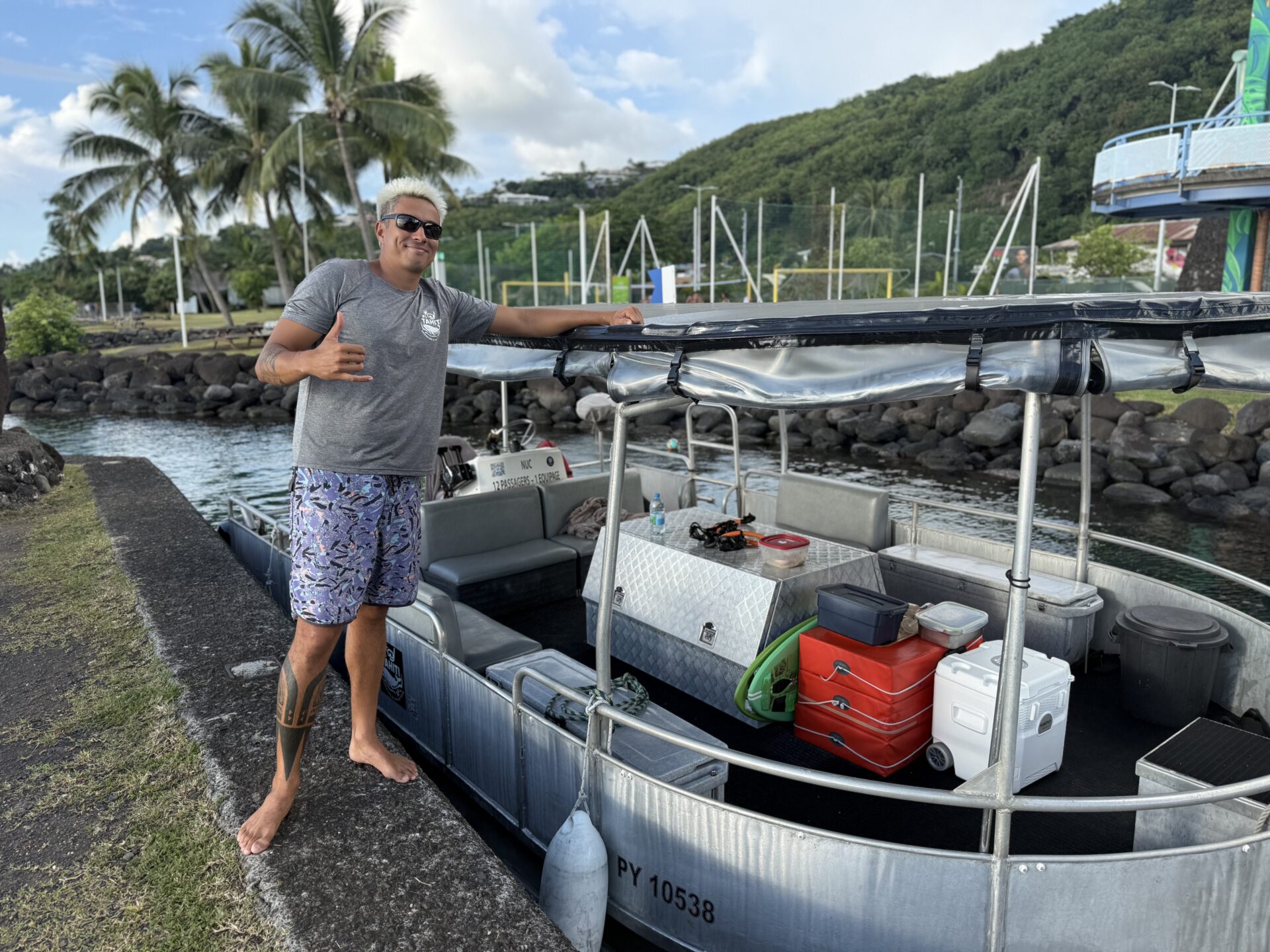
The snorkeling tour in Tahiti tour runs approximately four hours, with pickup around 1 PM and return by 5 PM. It’s the perfect structure — your morning is free to explore Papeete (more on that below), and you’re back in time for dinner. Not rushed or overwhelming, like Goldilocks says, “Just right”.
The First Sandbar Stop: Into the Teal Water
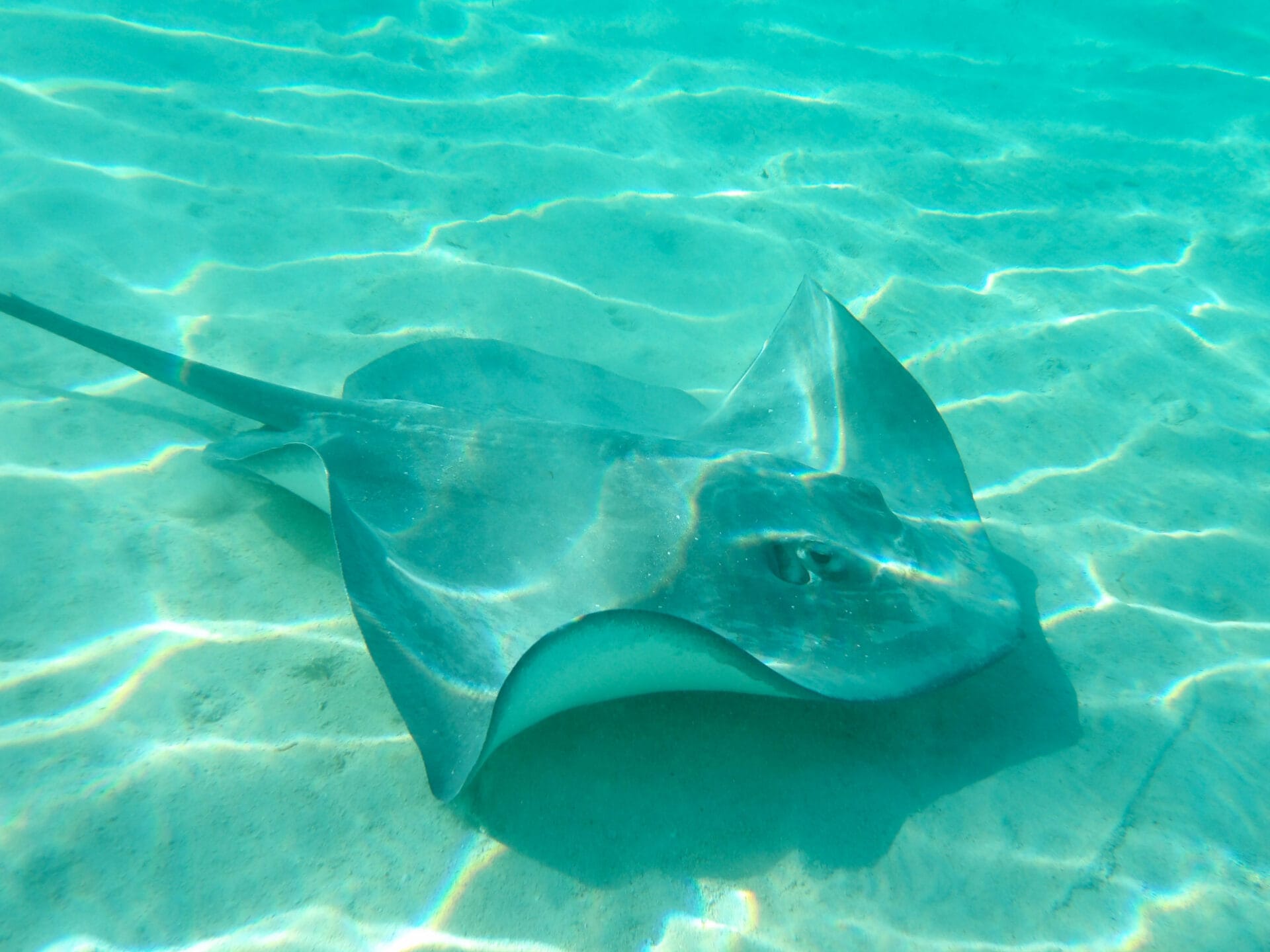
Our first stop was a sandbar, and this is where the reality of where we were finally hit us.
We’d seen the teal water from the plane on our way in — that impossible blue-teal that you think must be enhanced in photos. And then you jump into it. Crystal clear and dancing with colour. A very warm 27 degrees. This was our first time actually being in the water of French Polynesia, and it took about sixty seconds before a stingray had spotted our boat and swam straight over to investigate.
One minute. That’s all it took.
We spent time here getting our snorkel gear sorted and our sea legs under us. And then Keanu called us back to the boat for something none of us were expecting.
A Traditional Tahitian Lunch on the Water
Laid out on the boat was a full traditional Tahitian lunch. Poisson cru — fresh tuna in coconut milk, probably caught that morning — with fresh cut vegetables, juice, and all the warmth of a meal someone had actually thought about and prepared for us.
Travelling with food allergies is something our family navigates on every trip. It can be stressful, it can limit experiences, and it can make mealtimes feel more logistical than joyful. Not here. Every allergy had been communicated ahead of time, and Keanu had built the meal around them without us having to say a word.
It was our first real Tahitian meal. It was soul-serving. And eating it on a boat in the middle of the lagoon most delicious and memorable lunches I’ve ever had.
Taapuna Pass: Turtles, Currents, and Eagle Rays
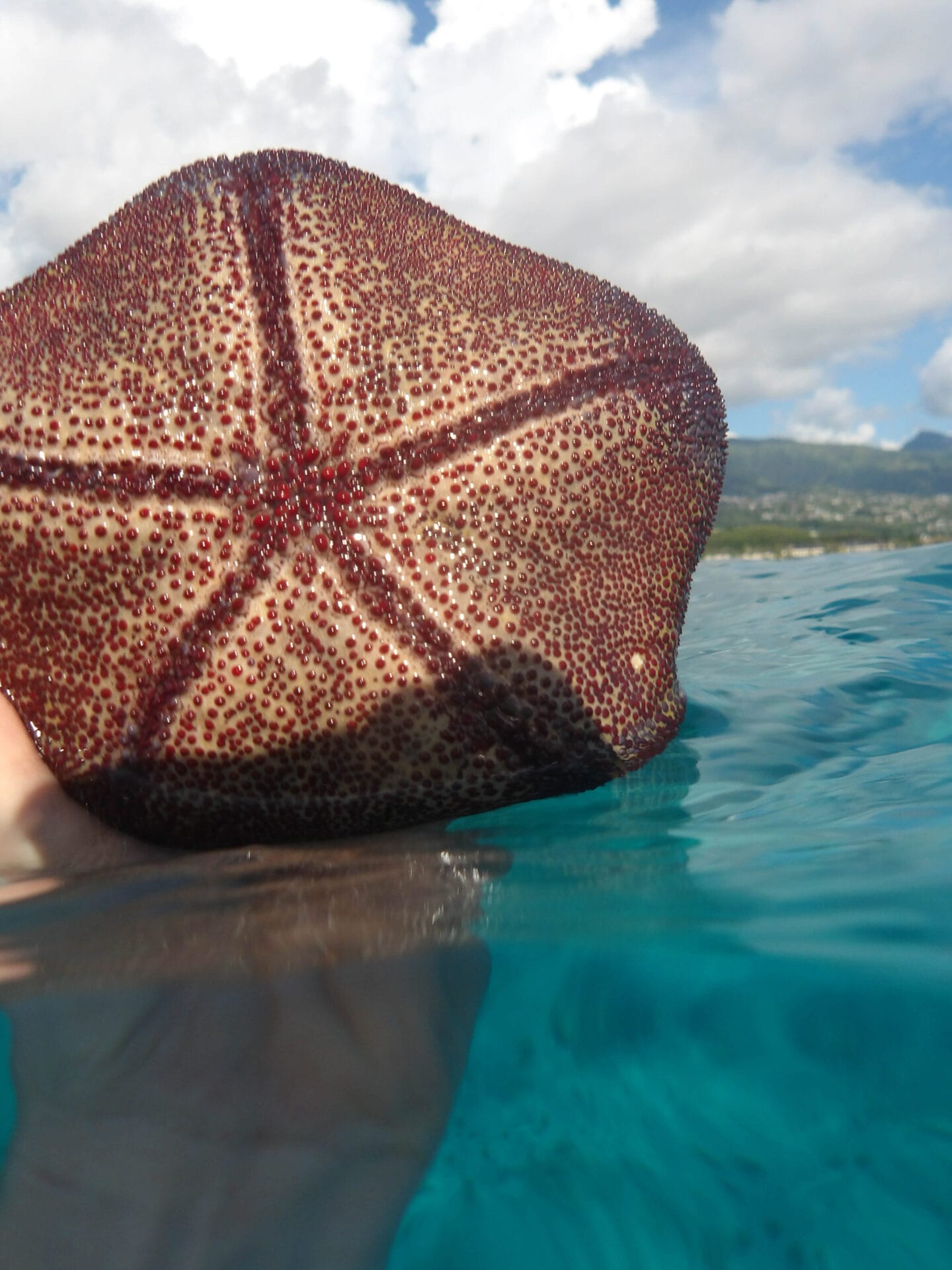
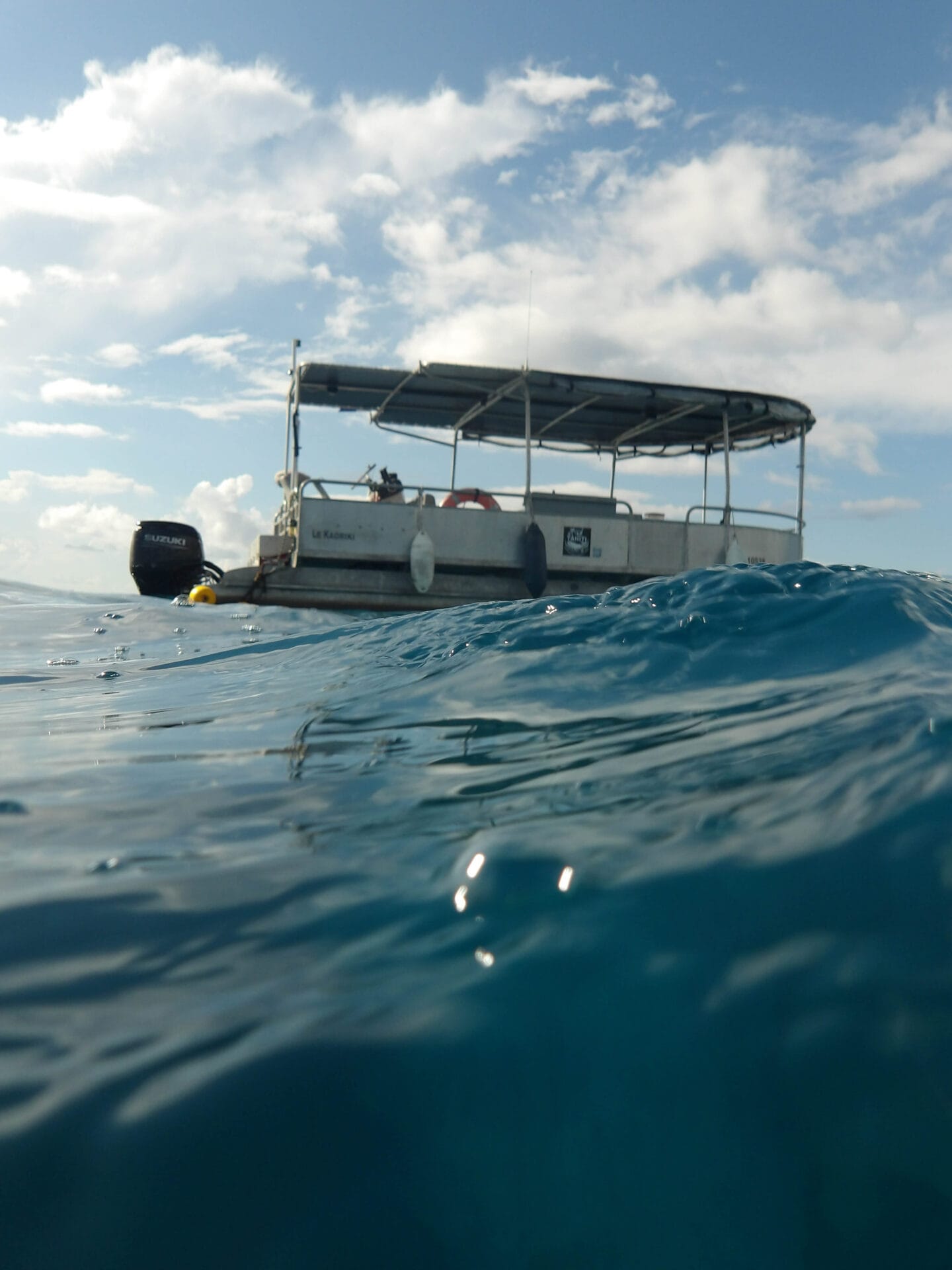
After lunch it was time to pack away our belongings and make our way to Taapuna Pass. This area is a natural channel that cuts through Tahiti’s coral reef, connecting the protected lagoon to the open ocean. The currents that flow through it carry nutrient-rich water from the deep, which attracts an extraordinary concentration of marine life — turtles, sharks, stingrays, rays, and hundreds of species of fish. It is one of Tahiti’s most famous snorkeling and diving sites, and there is a reason for that.
Getting there was its own experience. As our boat navigated through the lagoon, we could see the shallow coral below us and watch Keanu carefully guide the boat between the buoys and markers. On one side: the protected teal water of the lagoon. On the other side, visible in the distance: the deep blue of the open ocean beyond the reef, a completely different color, with larger waves breaking against the coral barrier. It felt like being inside the world of Moana — that exact moment where the lagoon ends and the open ocean begins.
As we approached the pass and Keanu moved to tie the boat to a buoy, we realized we couldn’t stop pointing. Turtles were everywhere. Green turtles and hawksbill turtles, swimming through the water around the boat, surfacing, diving, grazing. So many that Keanu had to pause and calmly tell us: “You’re going to see a lot of turtles, but you need to let me tie up the boat first.”
We had been in Vancouver on a rainy day less than twenty-four hours before this moment. And now we were in twenty-seven-degree sunshine, about to jump into twenty-seven-degree water with more turtles than we could count.
What followed was forty-five minutes of swimming alongside turtles of all shapes and sizes — some sleeping on the bottom, some grazing on algae, some cruising through the water with the unhurried ease of a creature that has been doing this for millions of years. Large green turtles. Hawksbill turtles. All of them were completely unbothered by our presence.
What I didn’t realize at the time — and only understood afterward — was that this first section of the pass was also Keanu’s way of assessing us as swimmers. Were we comfortable in the water? Was our gear performing well? Were we ready for what came next?
We were.
Keanu gathered us together and explained that we were about to swim through the pass itself — and that the current would be powerful. We lined up, guide in the middle, a parent on either end, kids between us, and we went in.
It was the strongest current I have ever swum in. Four or five minutes of hard, focused swimming — not dangerous, but demanding. You had to work. You could feel the water pushing against you and through you as you moved between the two reef walls.
And then, all at once, it released.
The current dissipated. We slowed. We looked down.
About thirty feet below us, a family of eight eagle rays was gliding through the water. Moving slowly, gracefully, completely unaware of — or completely unbothered by — the five humans hovering above them. We floated over them, watching, until they drifted out of sight.
That was Taapuna Pass. A must-see snorkeling destination in Tahiti!
Nuuroa Bay Coral Gardens: A Rainbow of Colors
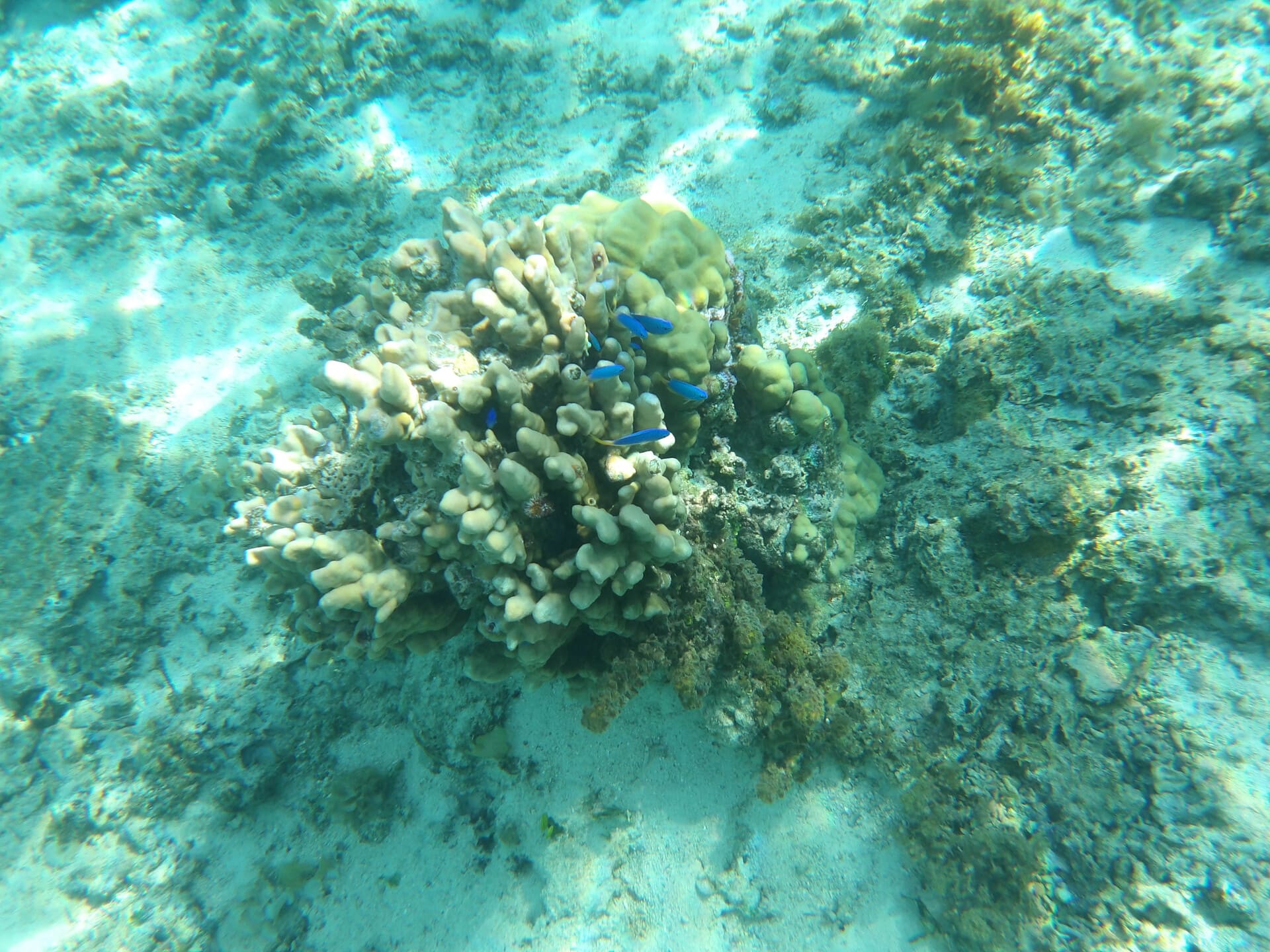
Our next stop was “The Source” in Nuuroa Bay — a natural freshwater spring where fresh water meets salt water, creating a unique thermocline that attracts an extraordinary concentration of marine life.
This was our first time seeing coral in French Polynesia, and it may have been the most vivid coral I have ever seen anywhere. Bright, saturated colors — indigo blues, electric teals, stripes of yellow, neons and colors I don’t have names for — spread across the reef below us. Fish in every variety moved through it in clouds and pairs and solo trajectories, curious and completely comfortable with human visitors.
The Faa’a Aquarium: A Sunken Plane, a Sunken Ship, and a Heart Made of Rocks
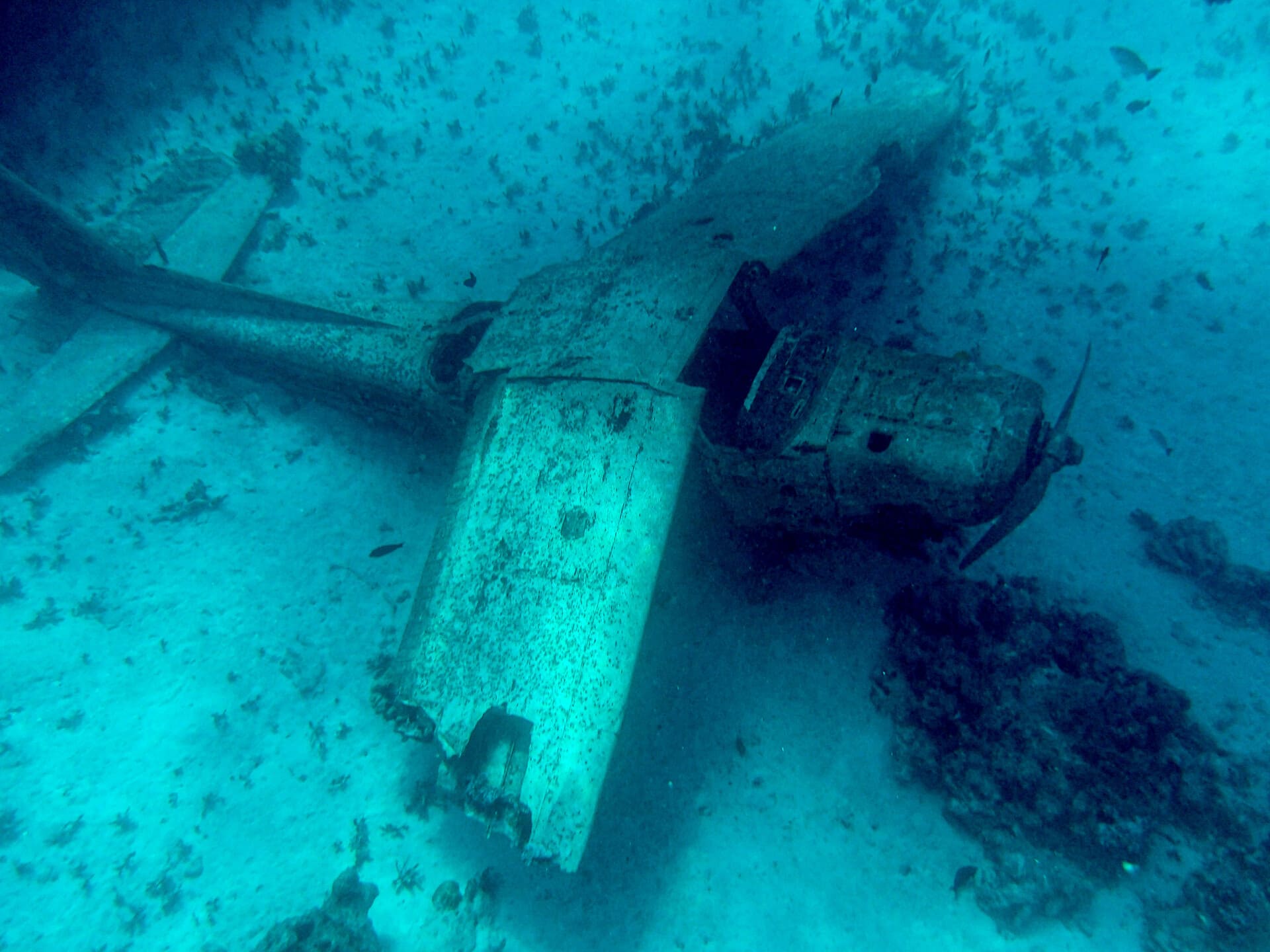
Nobody told us about the plane.
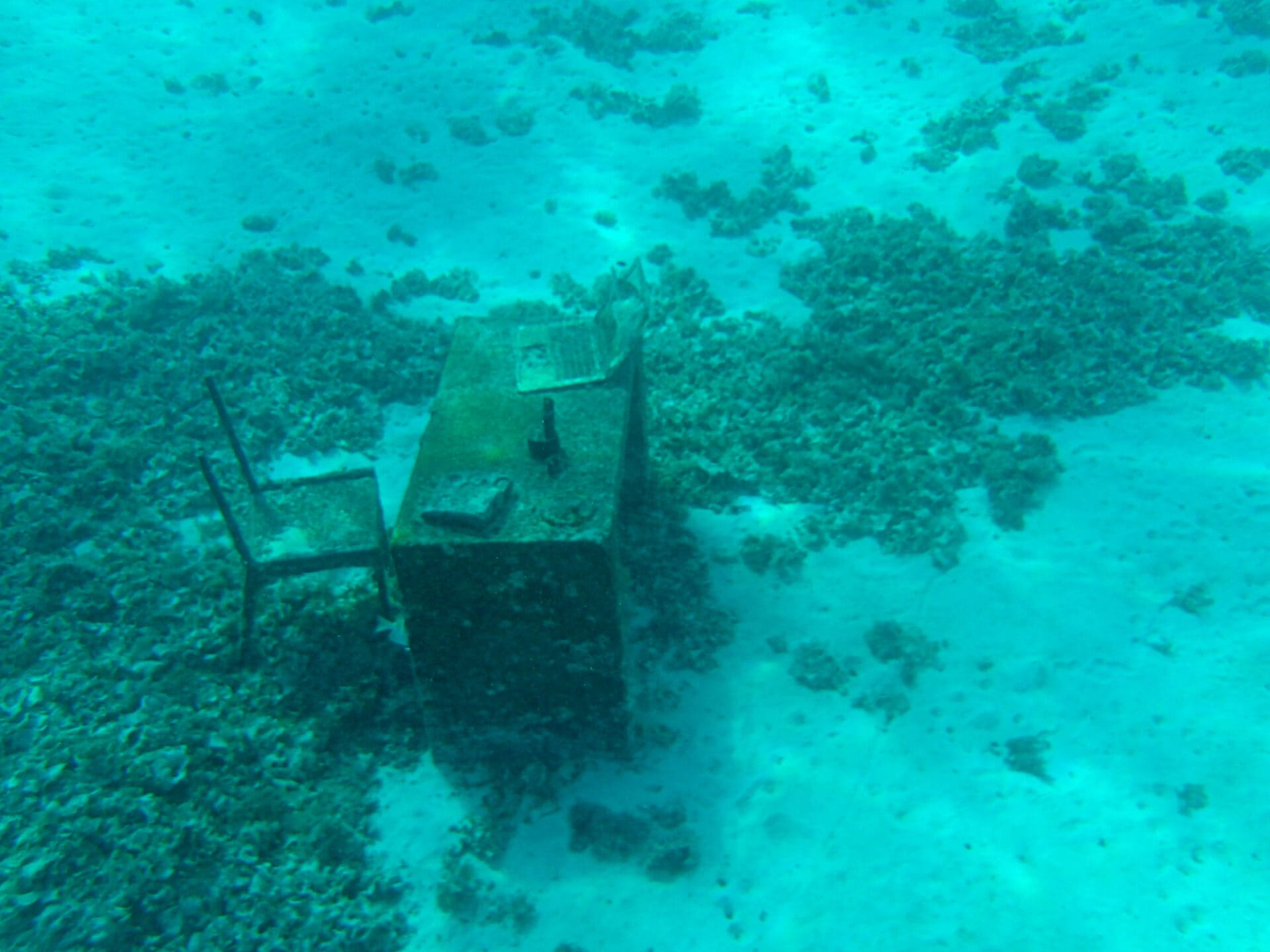
We knew there was a snorkeling spot near Faa’a that people called the “aquarium” — calm water, lots of fish, a sunken ship. What we didn’t know, what Keanu hadn’t mentioned, was that there was also a sunken plane.
As the boat approached and my daughter looked over the side and saw the outline of a ship below the surface, her eyes went wide. Are we going to snorkel on a sunken ship? Yes. Yes we are.
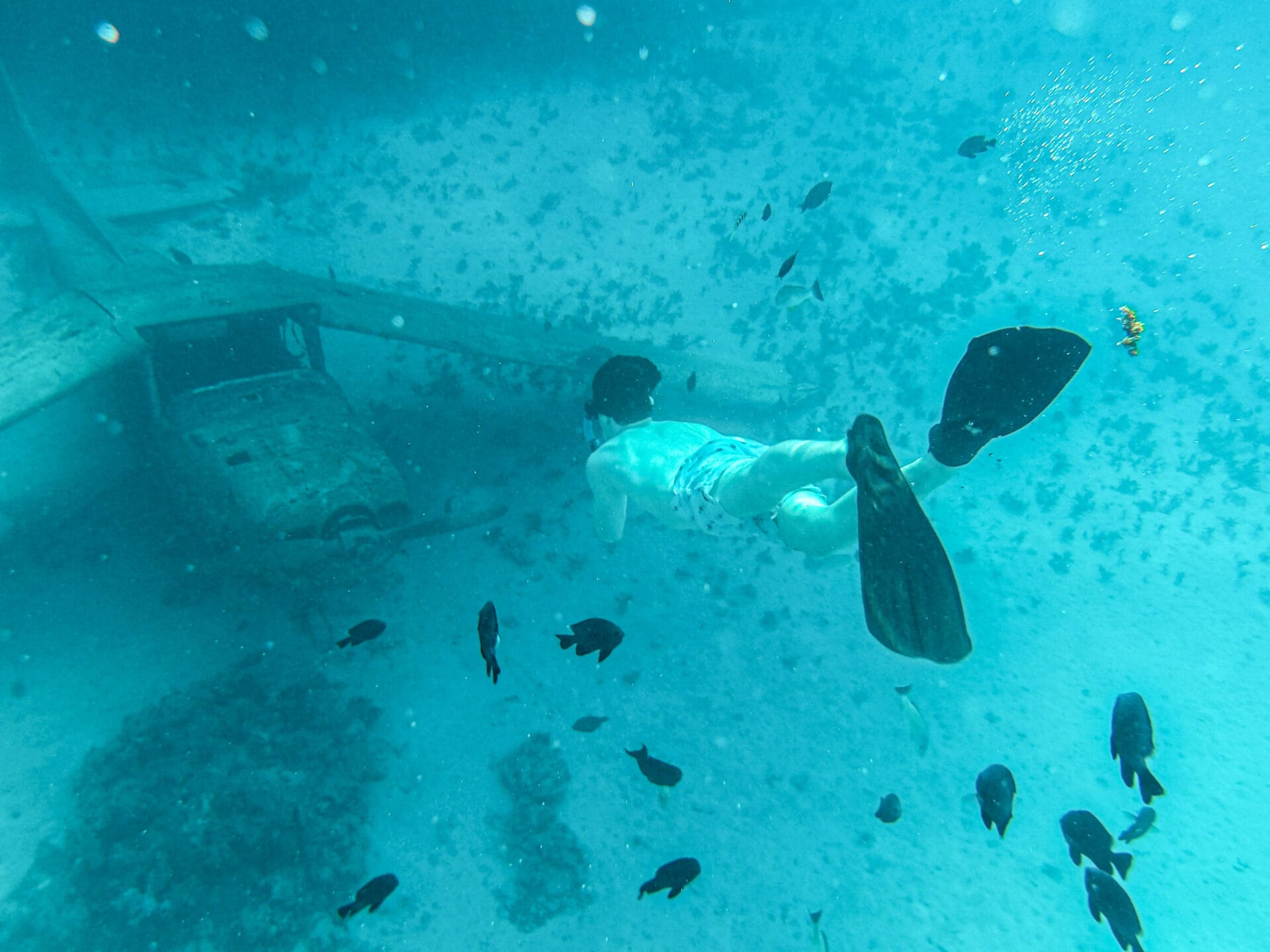
And then we got in, and we saw the plane.
There is something uniquely disorienting about seeing a plane underwater. You know where planes belong. You’ve spent your whole life associating them with sky and altitude and the particular feeling of being thirty thousand feet up. Seeing one on the ocean floor — its fuselage intact, coral already colonizing its wings, fish darting in and out of the windows — creates a kind of cognitive dissonance that takes a moment to process. It was cool in a way that’s hard to articulate.
And then there was the heart.
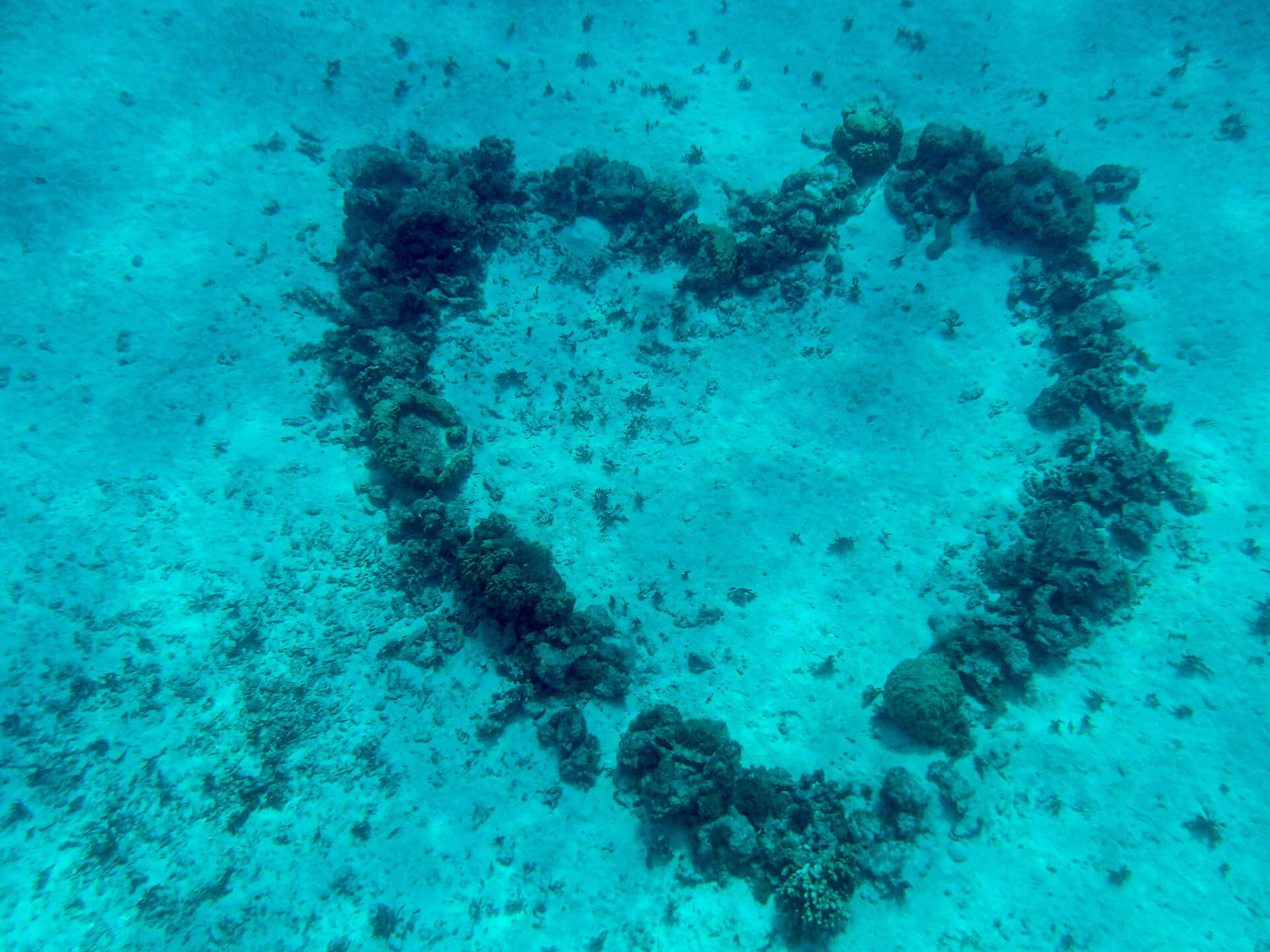
Someone had arranged rocks on the ocean floor into the shape of a heart. Large, unmistakable, sitting there among the coral and the wreckage and the fish. We hovered above it, looking down, and I thought: everyone who comes to Tahiti falls in love with it. That heart wasn’t just decorative. It was a statement. And on a day that had already given us more than we could have asked for, the heart symbolized our experience beautifully.
The Double Rainbow Over Papeete
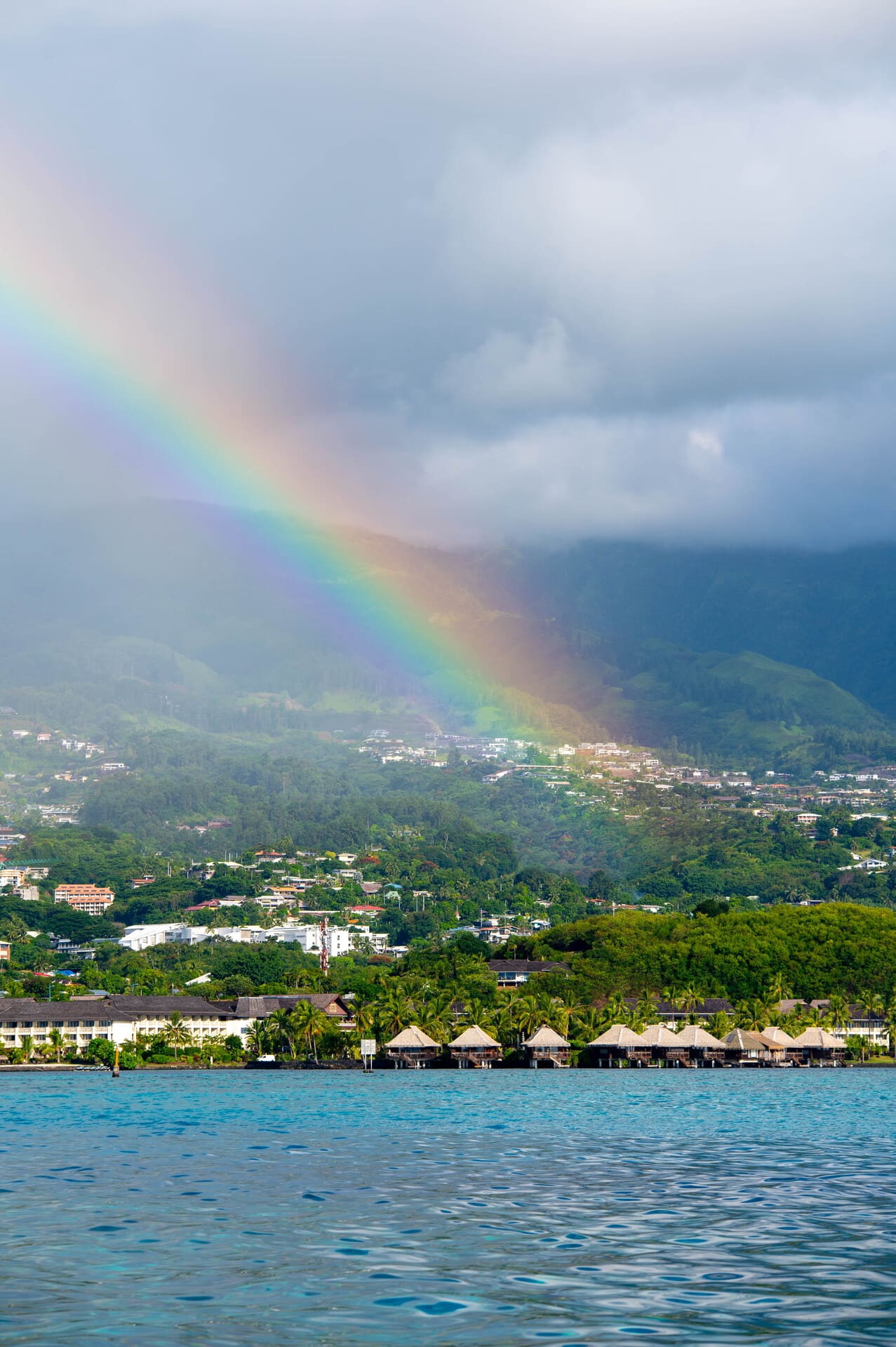
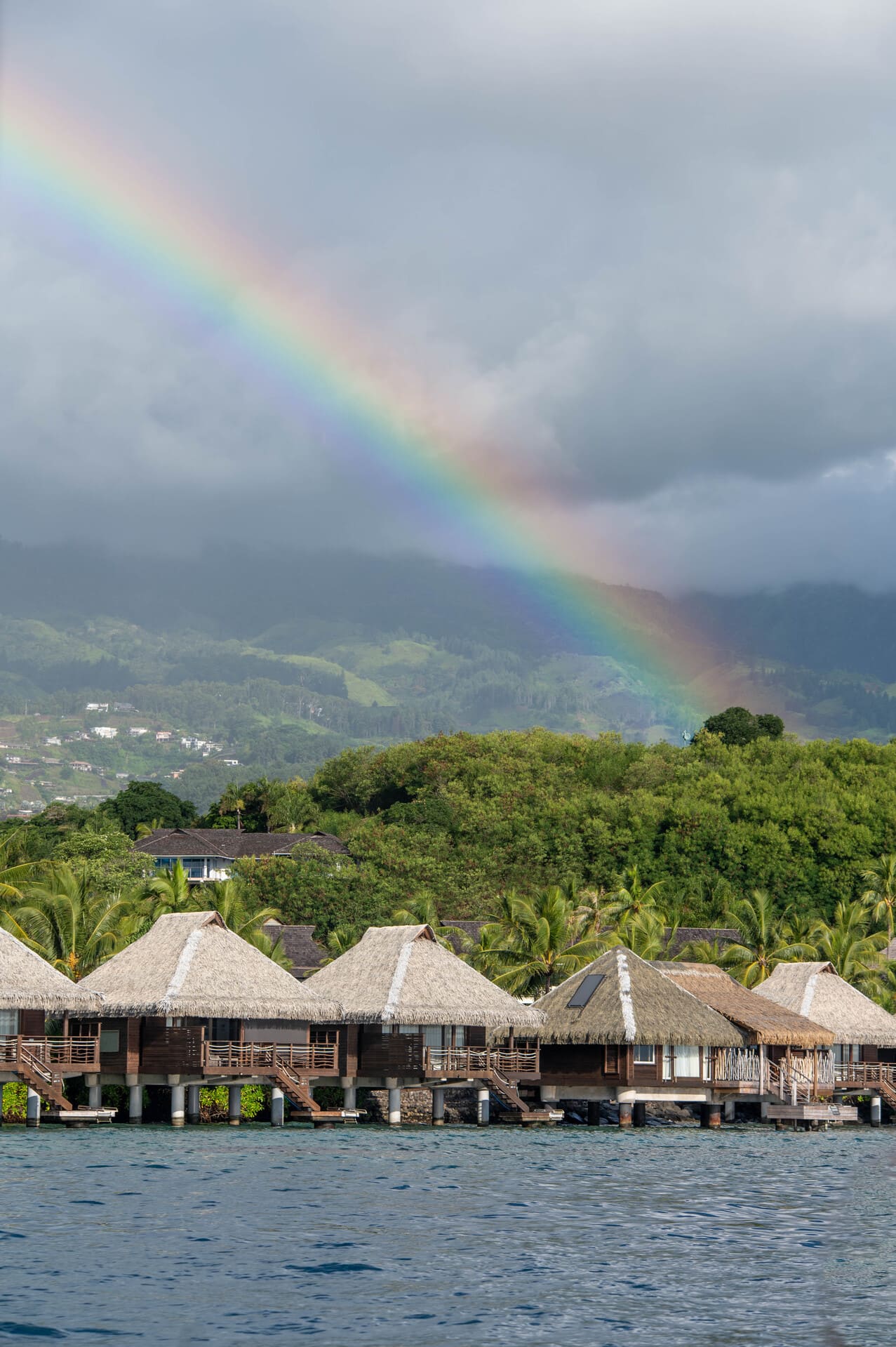
We surfaced from the aquarium, pulled off our gear, and looked up.
A double rainbow had appeared over Papeete. Full arc, both bows visible, hanging over the city and the water and the mountains behind it.
We had landed in Tahiti that morning. We had explored the city, eaten at the market, walked the streets. And then in one afternoon, we had swum with stingrays, eaten a traditional Tahitian lunch on the water, swum with turtles and eagle rays through one of the most powerful currents any of us had ever been in, seen coral gardens more vivid than anything we’d encountered in years of travel, and snorkeled over a sunken plane and a heart made of rocks.
And now there was a double rainbow.
This was our first day. Our very first day of two weeks in French Polynesia. And proof that magic is REAL!
What You Need to Know Before You Book
Don’t skip your morning in Papeete. The afternoon timing of this tour means your morning is free. We spent ours at the Papeete Market — a vibrant, colorful, genuinely local experience with fresh produce, pearl vendors, local crafts, and food stalls. Walk the waterfront. Have breakfast in town. Papeete is worth your time.
What to bring: Swimsuit, towel, hat, reef-safe sunscreen (this is non-negotiable — the sun here is intense even in the afternoon), your own water bottle, and an underwater camera if you have one. The visibility and the marine life make every underwater photo worth taking. Snorkel gear is provided.
Allergies: Communicate them when you book. Keanu accommodated our family’s allergies completely and without fuss.
Tour length: Approximately 4 hours. Pickups at 8AM and 1 PM are available.
Cost: Varies based on group size and if you want a private experience. Prices start at $120 per person. (I’m assuming that’s in USD as most sites are in XPF so b sure to confirm.)
How to book: https://www.tahiti-snorkeling-and-whale-tour.com/
Is It Worth It?
This tour was our introduction to French Polynesia. It set the tone for everything that followed. And two weeks later, when we were looking back at the whole trip, this afternoon still ranked among the best things we did.
Stingrays within one minute of entering the water. More turtles than we could count at Taapuna Pass. The physical challenge of the current and the reward of eagle rays on the other side. Coral gardens in colors we’d never seen. A sunken plane. A heart made of rocks. A double rainbow. It sounds cliche, but this is what dreams are made of.
Tahiti Snorkeling FAQ’s
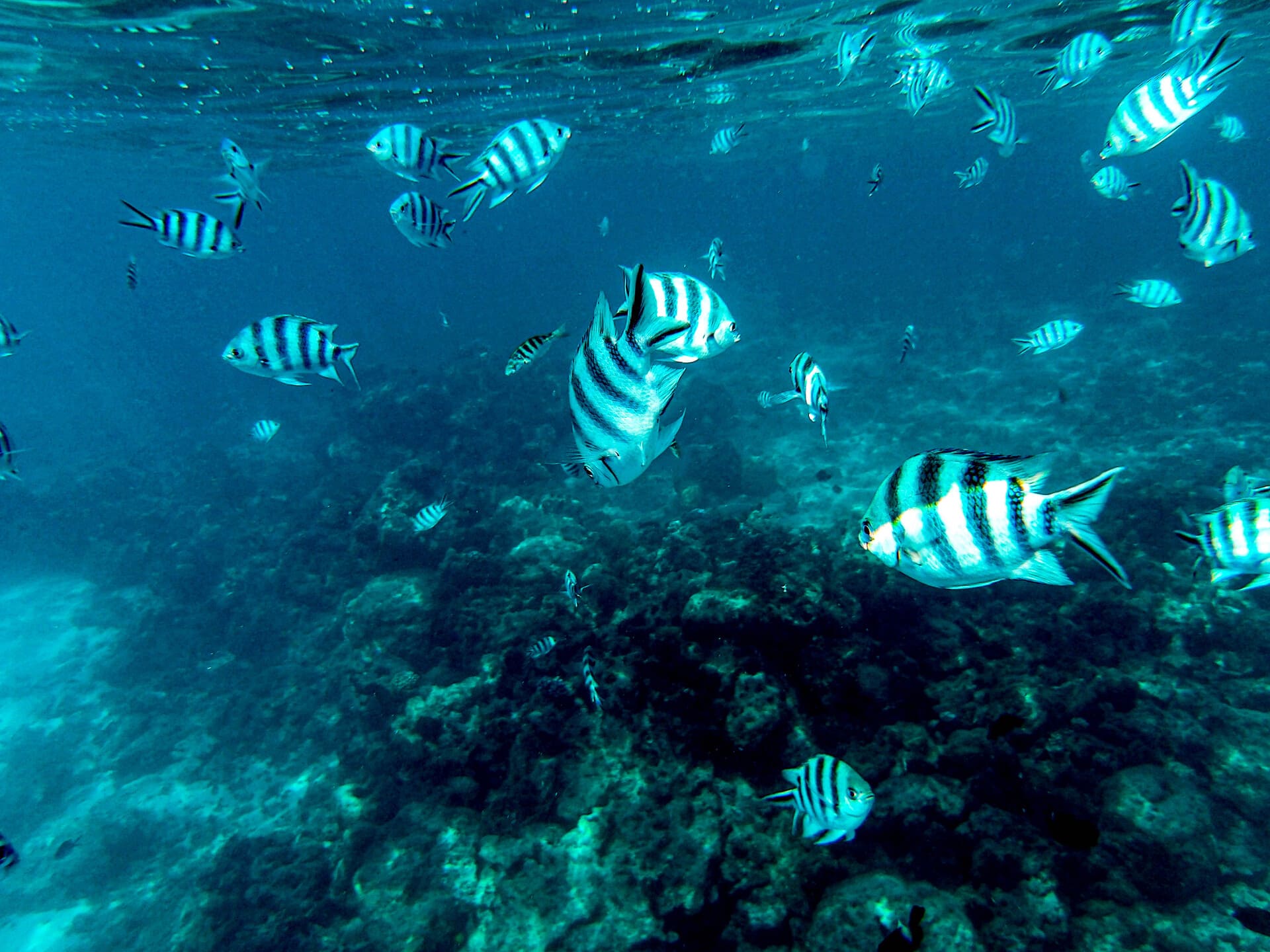
Tahiti is exceptional for snorkeling. The island is surrounded by a protective coral reef lagoon with crystal clear warm water, extraordinary visibility, and an abundance of marine life, including turtles, stingrays, sharks, eagle rays, and hundreds of species of tropical fish. Whether you’re a beginner or an experienced snorkeler, the waters around Tahiti offer some of the most rewarding underwater experiences in the world.
Yes — and it consistently ranks among the best snorkeling destinations on the planet. The lagoon system around Tahiti creates calm, protected waters ideal for snorkeling, while natural passes like Taapuna Pass offer more adventurous experiences with powerful currents and extraordinary concentrations of marine life. The coral health, water clarity, and diversity of species set it apart from many other tropical destinations.
Yes, and they are one of the highlights of snorkeling in French Polynesia. The most commonly encountered species are black-tipped reef sharks, which are non-aggressive and completely accustomed to human visitors. Swimming alongside them in the shallow lagoons of Tahiti and Moorea is one of those experiences that sounds intimidating but feels, in the moment, completely extraordinary — more like swimming with curious wildlife than anything dangerous.
The most important things to remember are sun protection, reef-safe sunscreen, and going in with an open mind. The Tahitian sun is powerful even when it doesn’t feel hot — reapply sunscreen every hour, wear a sun shirt in the water, and don’t underestimate it. Beyond that, remember that French Polynesia operates on island time, many small businesses are best reached by phone or social media rather than formal booking systems, and the most memorable experiences often happen when you slow down and let the place come to you rather than rushing through a checklist.
French Polynesia exceeded every expectation we had — and we had high ones. What surprised us most wasn’t the beauty, which we expected, but the culture. The warmth of the Tahitian people, the depth of their traditions, the pride they take in sharing their islands with visitors — that’s what stayed with us. We came for the water and the landscapes. We left having learned something about how to travel more intentionally, connect more genuinely, and see the world through someone else’s eyes.
Tahiti, without hesitation — and I say that as someone who loves Hawaii deeply. Hawaii is more accessible, more developed, and easier to navigate as a first-time tropical destination. But French Polynesia offers something that is harder to find: a sense of genuine remoteness, a culture that feels intact and proud, and natural environments that have not yet been overwhelmed by mass tourism. The snorkeling, the lagoons, the people, the food, the feeling of being somewhere truly extraordinary — Tahiti delivers all of it at a level that, for our family, Hawaii simply hasn’t matched.
Yes. And I say that as someone who is usually suspicious of that word. Paradise gets used to describe a lot of places that are beautiful but ultimately ordinary once you arrive. Tahiti is different. The color of the water is genuinely unlike anything I have seen anywhere else in the world. The marine life is so abundant and so accessible that you can be swimming with turtles and sharks within an hour of landing. The culture is warm, generous, and genuinely fascinating. And there are moments — standing on a boat watching a double rainbow form over the lagoon after your first day of snorkeling, or lying on the floor of an overwater bungalow watching turtles and sharks swim beneath you at midnight — where you look around and think: this is real, and it is even better than the photos.