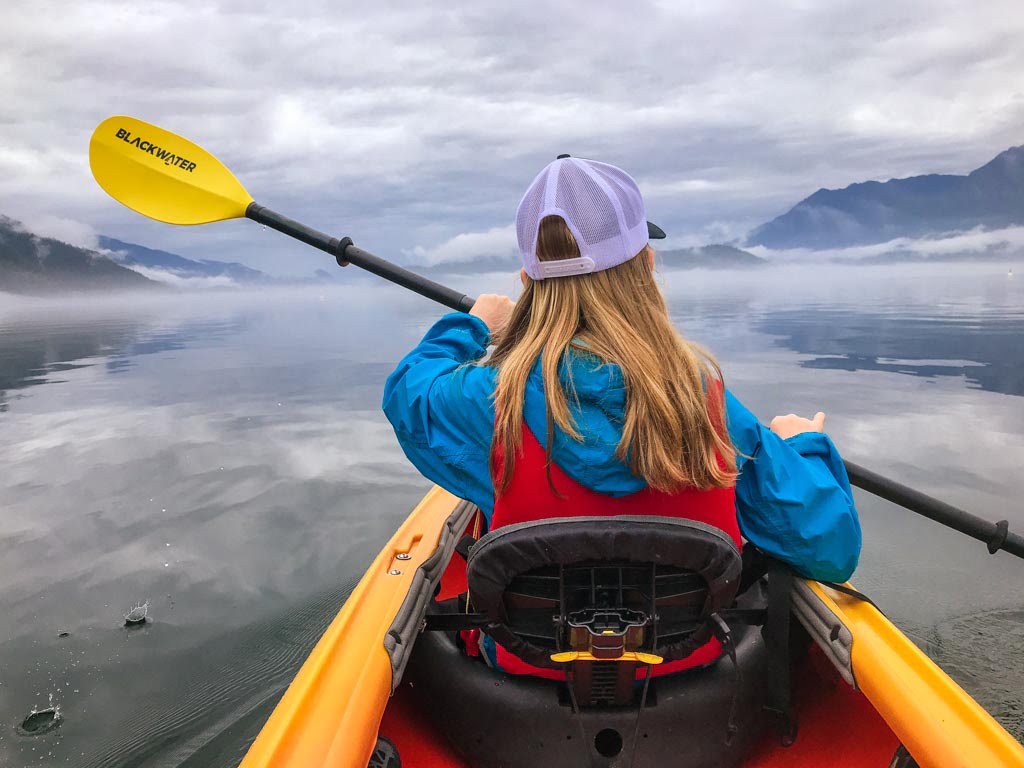

Only twenty minutes from Langley, the farm road gave way to lush trees and flat, open plateaus, and then suddenly we were wrapped in mountains. The day was misty and overcast, the clouds hanging low over the peaks, and the air had that warm, humid weight to it. My daughter kept saying it from the back seat: “Mom, I feel like we’re in Tahiti.”
Once we were out on the water, she barely paddled at all. She was too busy taking it in, repeating the same thing over and over: “Mom, how come we’ve never been here? This is so beautiful.”
I’d waited thirty years to make this trip. I still don’t know why I waited so long. Widgeon Creek is one of those rare places that feels completely remote, completely wild, and completely magical — yet it’s sitting practically in our backyard, just outside Pitt Meadows. This past spring, I finally paddled it with a crew of teenagers in tow, and it turned into one of the most memorable adventure days our family has had. If you’re looking for a real, full-day wilderness adventure that’s still accessible enough for a group of mixed ages and abilities, this is it.
Here’s everything you need to know to plan your own trip to Widgeon Creek and Widgeon Falls — including the safety details that matter most.
The Quick Facts
| Distance: | About 15 km round trip (10 km paddling, 5 km hiking) |
| Paddle: | Approximately 4.5 km each way from Grant Narrows Regional Park to Widgeon Creek Campground |
| Hike: | Approximately 3 km each way to Widgeon Falls (6 km round trip) |
| Time: | Plan for 4 to 6 hours minimum if doing it as a day trip; longer if you linger |
| Cost: | Launching is free from the beach; canoe and kayak rentals are available on-site |
| Difficulty: | Moderate — approachable for many fitness levels and ages, but it is a long day and tide-dependent |
| Best for: | Families with older kids and teens, groups of friends, paddlers comfortable with a few hours of steady effort |
Getting There: Grant Narrows Regional Park
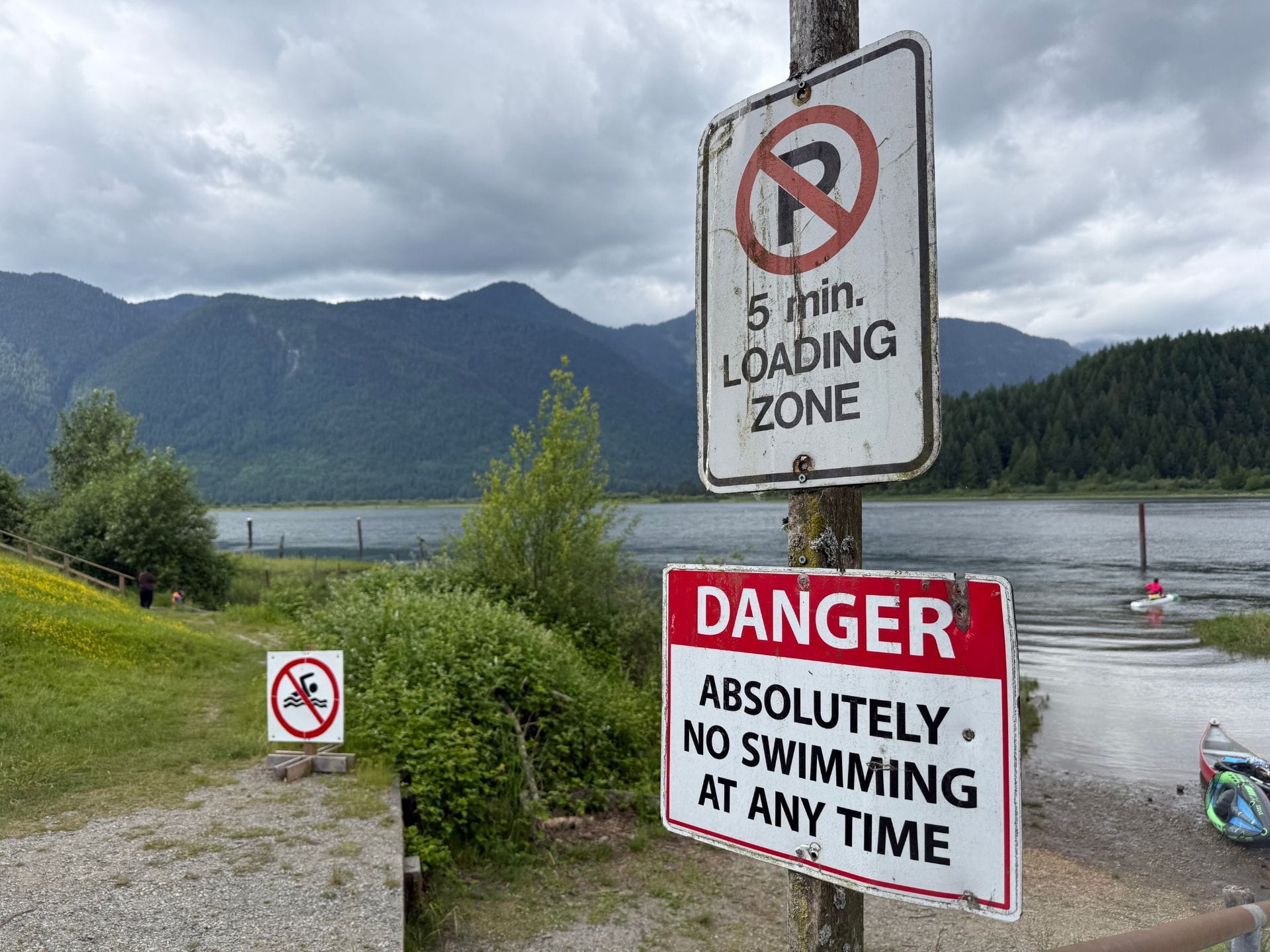
Your adventure begins at Grant Narrows Regional Park in Pitt Meadows, BC — the launch point for your Widgeon Creek paddle and the gateway to the Pitt-Addington Marsh Wildlife Management Area. From Langley or Vancouver, it’s a quick and scenic drive out, and the transformation from city to wilderness happens fast. One minute you’re crossing a bridge with city traffic going, and twenty minutes later you’re surrounded by mountains.
At Grant Narrows, you’ll find a beach launch area, a boat launch, canoe and kayak rentals (operated by X̱ẃam, a Katzie First Nation limited partnership), portable toilets, and parking. There’s a marina with a small fee for the boat launch, but the beach launch for canoes, kayaks, and paddleboards is free.
Insider tip: Canoe rentals can sell out, especially on busy summer days, so arrive early if you need to rent gear.
The Most Important Thing to Know Before You Go: Tides
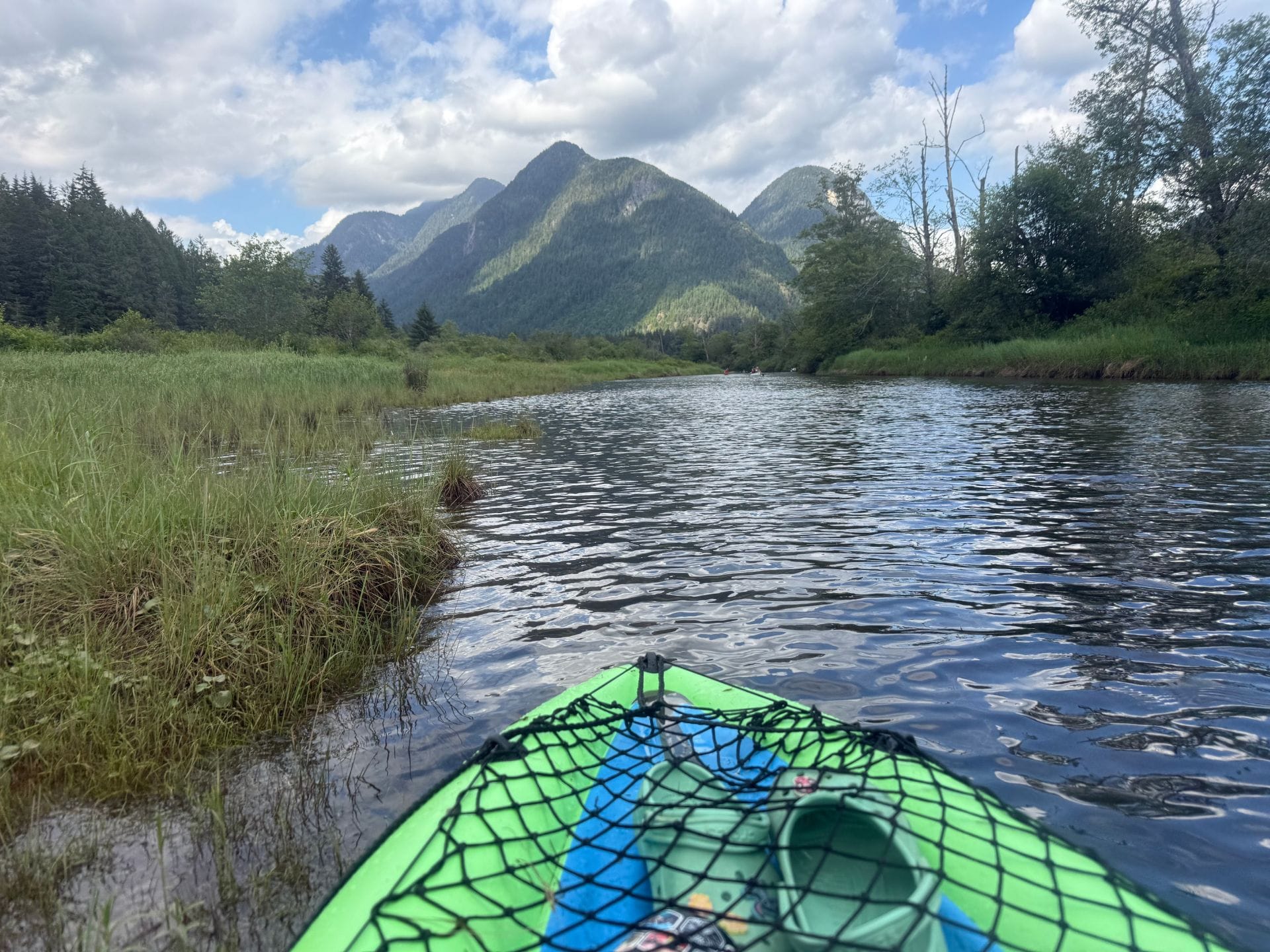
Before we get into the fun parts of this trip, let’s talk about the single biggest factor in how your day will go: the tide.
Pitt Lake is the largest tidally influenced freshwater lake in North America, which means Widgeon Creek rises and falls with the tide, even though it’s nowhere near the ocean. Paddlers generally use Point Atkinson tide tables and add roughly four hours to estimate conditions at Widgeon Creek, though this can shift depending on the Fraser River’s flow. It’s not an exact science, but it’s a useful starting point.
Why does this matter so much? If you paddle in near low tide, sections of Widgeon Creek can become shallow enough that you’ll need to get out and wade or pull your canoe over sandbars. We learned this firsthand: on our way back, we hit a stretch where the water was barely four inches deep beneath our canoe. We were lucky that the tide wasn’t shifting against us harder in that moment, but it was a clear reminder of how quickly conditions can change.
We also felt the tide directly during our crossing of the Pitt River. Heading out, the crossing was a steady, manageable ten-minute paddle. Coming back several hours later, the tide had turned, and that same stretch took us twenty hard minutes of paddling against the current. Several other paddlers we passed mentioned they were timing their departure specifically because they could feel the tide starting to go.
Our advice: Check the tide tables before you go, aim to paddle in and out around high tide where possible, and build in extra time so you’re not rushing the crossing to from the marina to the entrance to the Widgeon Slough. Planning around the tide isn’t optional here — it’s the difference between an easy paddle and a genuinely hard one.
The Crossing, and the Magic of Widgeon Creek Slough
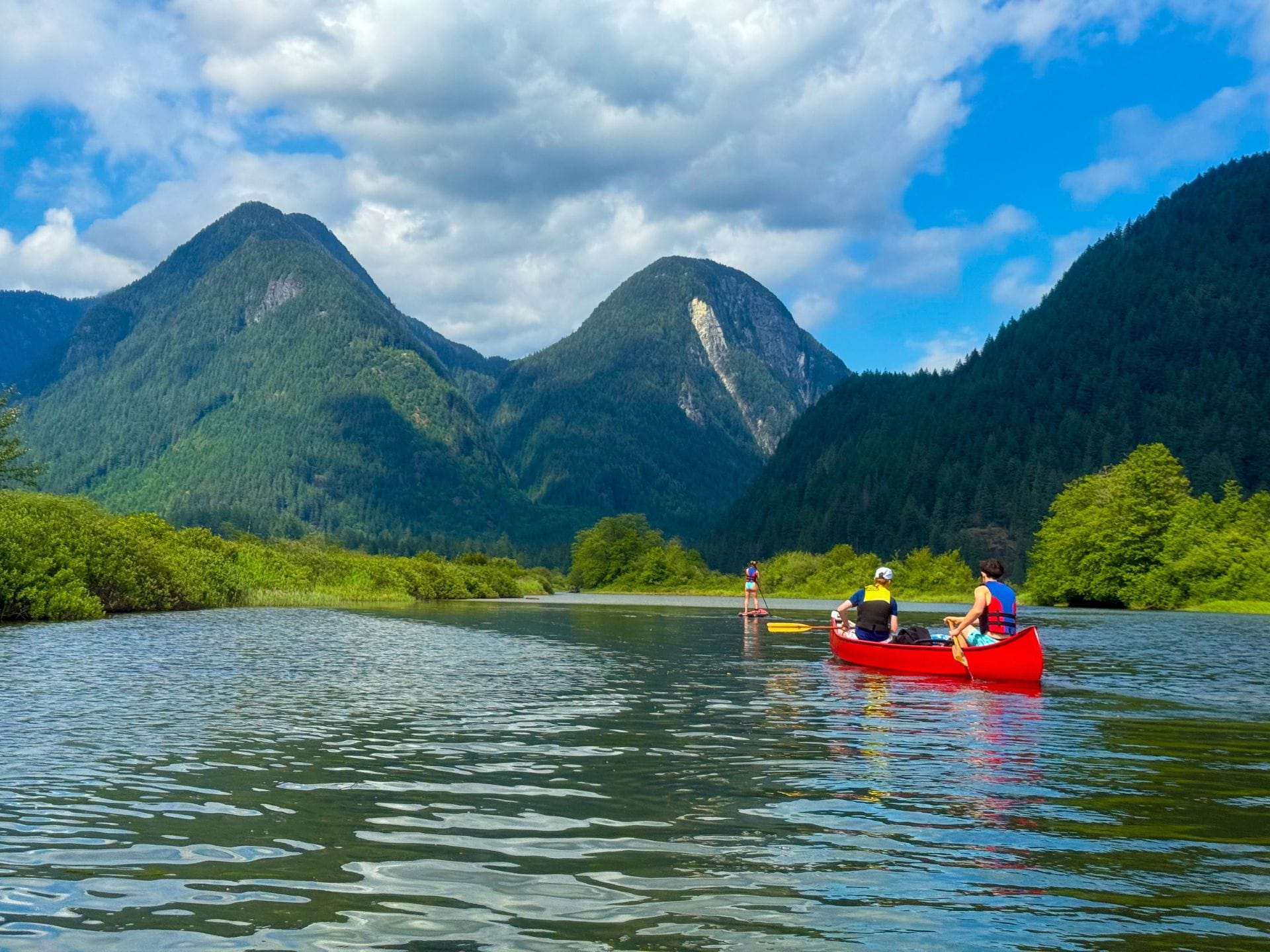
From the beach at Grant Narrows, you’ll paddle across the Pitt River into Widgeon Slough. This crossing looks more daunting on a map than it actually is — in calm conditions, it’s a steady paddle of around ten minutes. That said, the river is affected by boat traffic and tidal current, so stay alert, especially for motorized boats heading toward the main boat launch.
The moment you pass into Widgeon Slough itself, everything changes. A sign marks the entrance: no powerboats allowed beyond this point. Almost instantly, the noise of the open lake disappears, and you’re paddling through a protected wetland that feels worlds away from anywhere. This area is part of the Pitt-Addington Marsh Wildlife Management Area, one of the most significant birding destinations in the region.
On our paddle through the slough, we saw a striking white swan, Canada geese and their goslings tucked along the grassy banks, a river otter, and eagles overhead. The only sound most of the way was our paddles dipping into the water. It’s the kind of scene that had my daughter asking, “Mom, where are we?!?”
Arriving at Widgeon Creek Campground
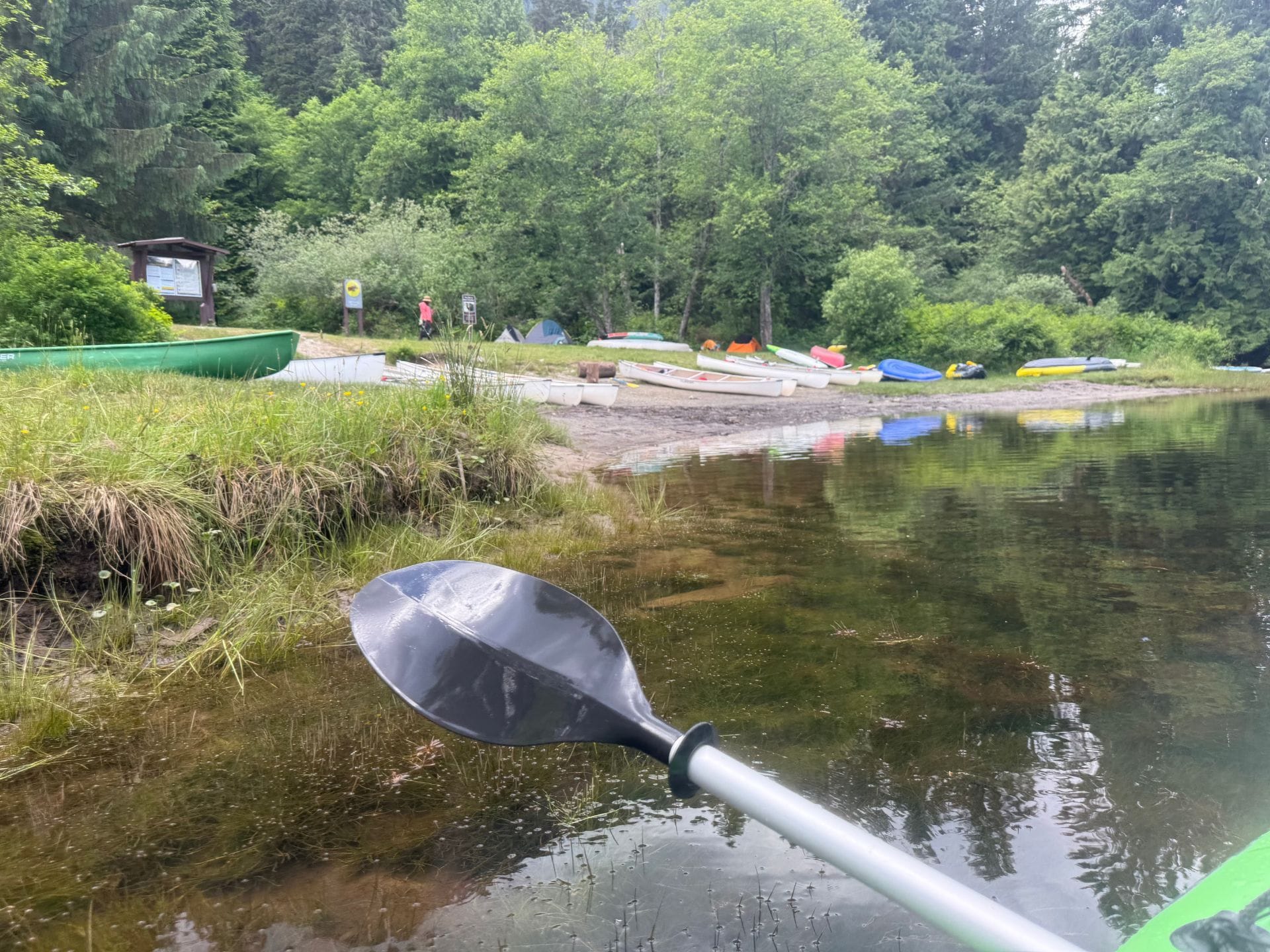
After roughly an hour and a half of paddling (the full 4.5 km stretch up Widgeon Creek), you’ll round a bend and the campground comes into view. It’s an exciting moment — and a relief, since the paddle, while not difficult, is long. We arrived to find the shoreline packed with inflatables, kayaks, canoes, and paddleboards, with dozens of colorful tents set up just beyond the beach. The site has a wonderful, bustling energy to it.
Widgeon Creek Campground sits within Pinecone Burke Provincial Park and is a backcountry, user-maintained site. Camping is free and first-come, first-served — there are no reservations and no fees. The site has roughly a dozen campsites, two pit toilets, and bear-proof food caches for storing your gear. There are no garbage facilities of any kind, so whatever you bring in, you pack back out.
You Are in Bear Country
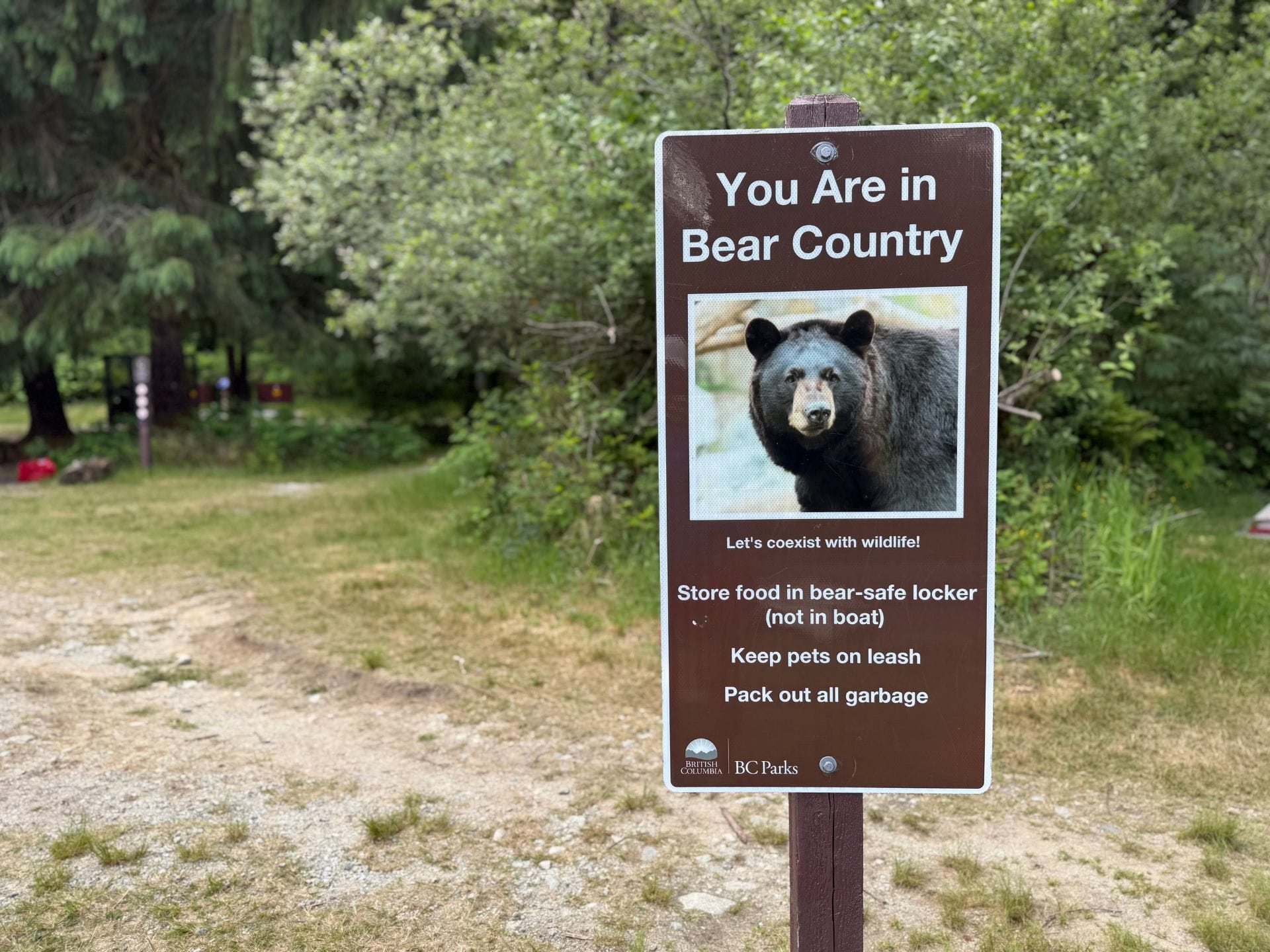
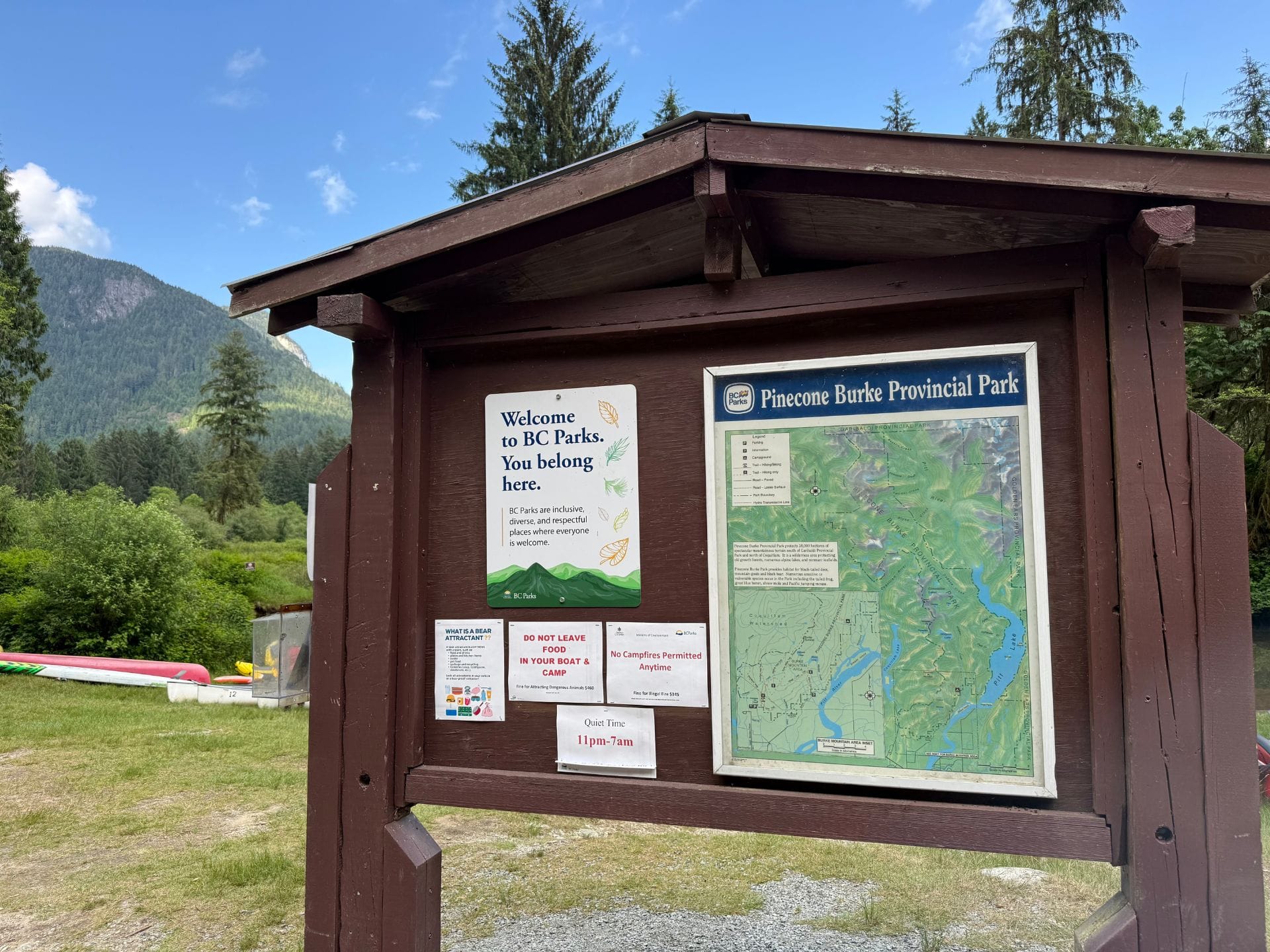
One of the first things you’ll see when you reach the campground is a large sign with a photo of a black bear and the words “You Are in Bear Country.” It’s not there for decoration. This is genuine bear habitat, and respecting that is part of what keeps both you and the wildlife safe.
- Store all food in the provided bear-proof lockers — never leave food in your boat or tent
- Pack out all garbage; there are no waste receptacles in the backcountry
- Keep pets leashed at all times
- Campfires are not permitted anywhere in the park, at any time of year — bring a portable stove if you’re cooking
These rules apply whether you’re camping overnight or just stopping for a day-trip lunch break.
Refuel Before You Hike
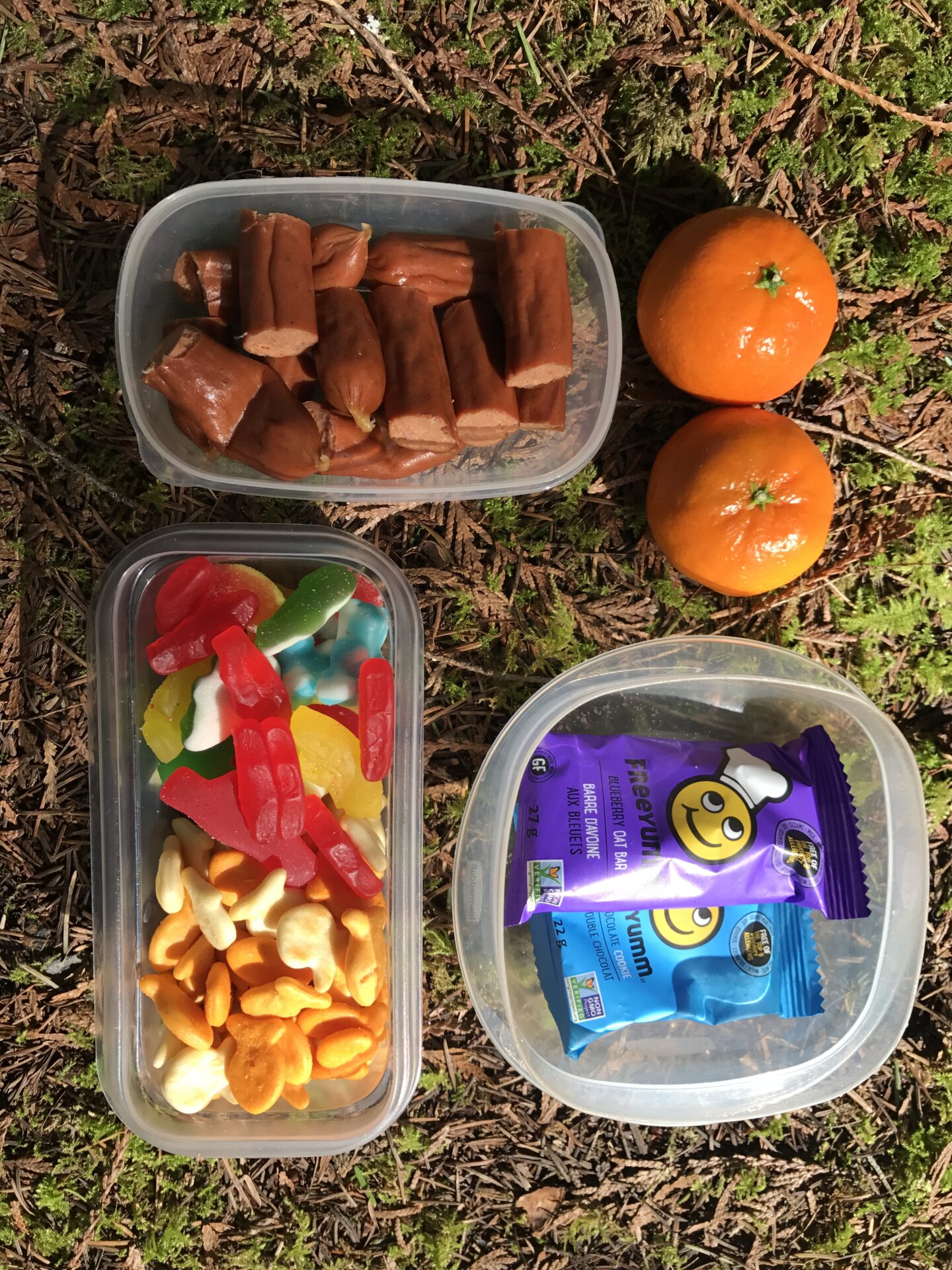
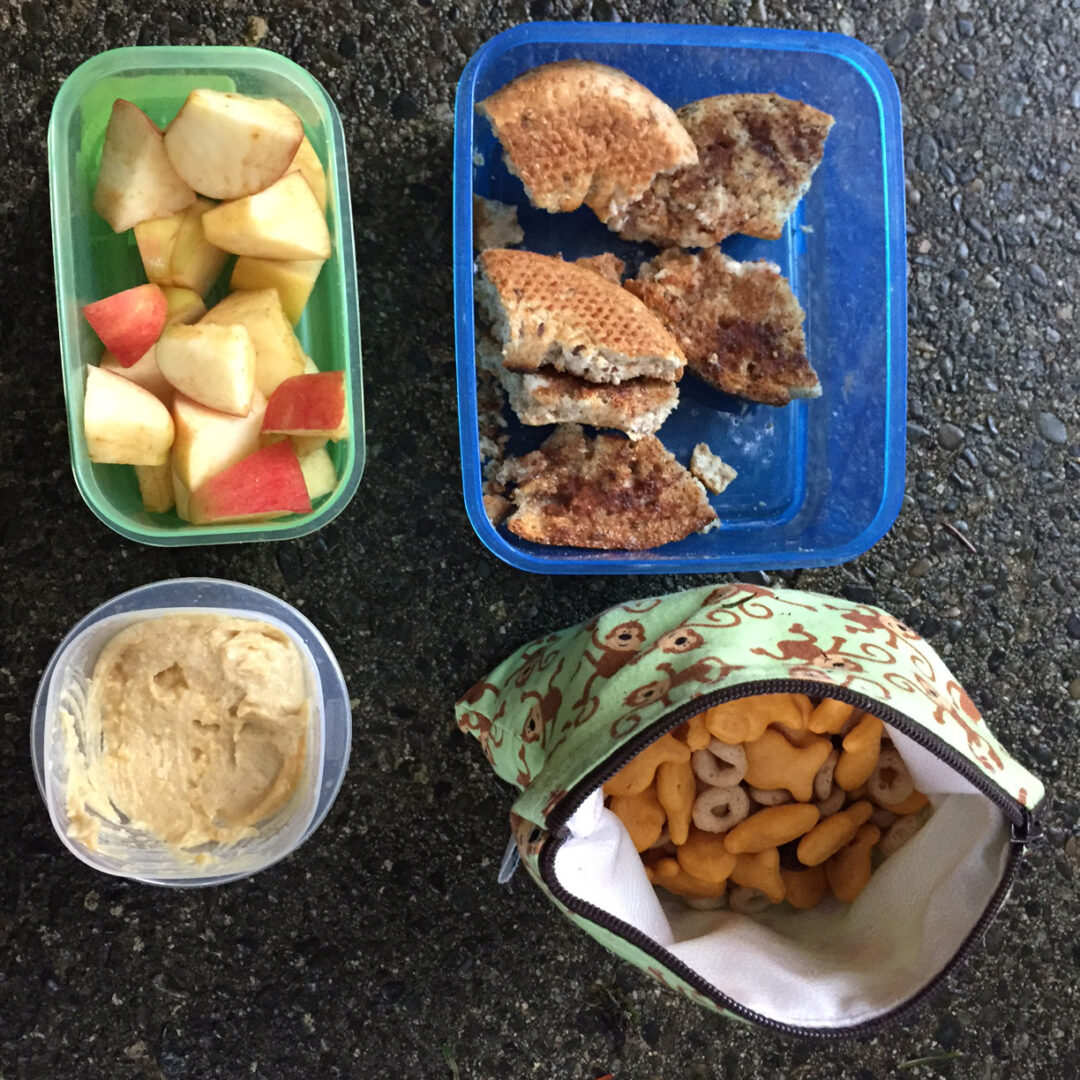
After the paddle, everyone in our group was ready for a proper break. I’d packed what I like to call a camping charcuterie board: separate containers of rolled meats and pepperoni sticks, cheeses, crackers, fruit, and vegetables. We spread it all out at the picnic tables and spent a good half hour refueling before tackling the hike. If you’re bringing a group, especially a mix of kids and teens, building in this kind of deliberate rest stop makes a real difference for energy and morale later in the day.
The Hike to Widgeon Creek Falls: Two Routes to Choose
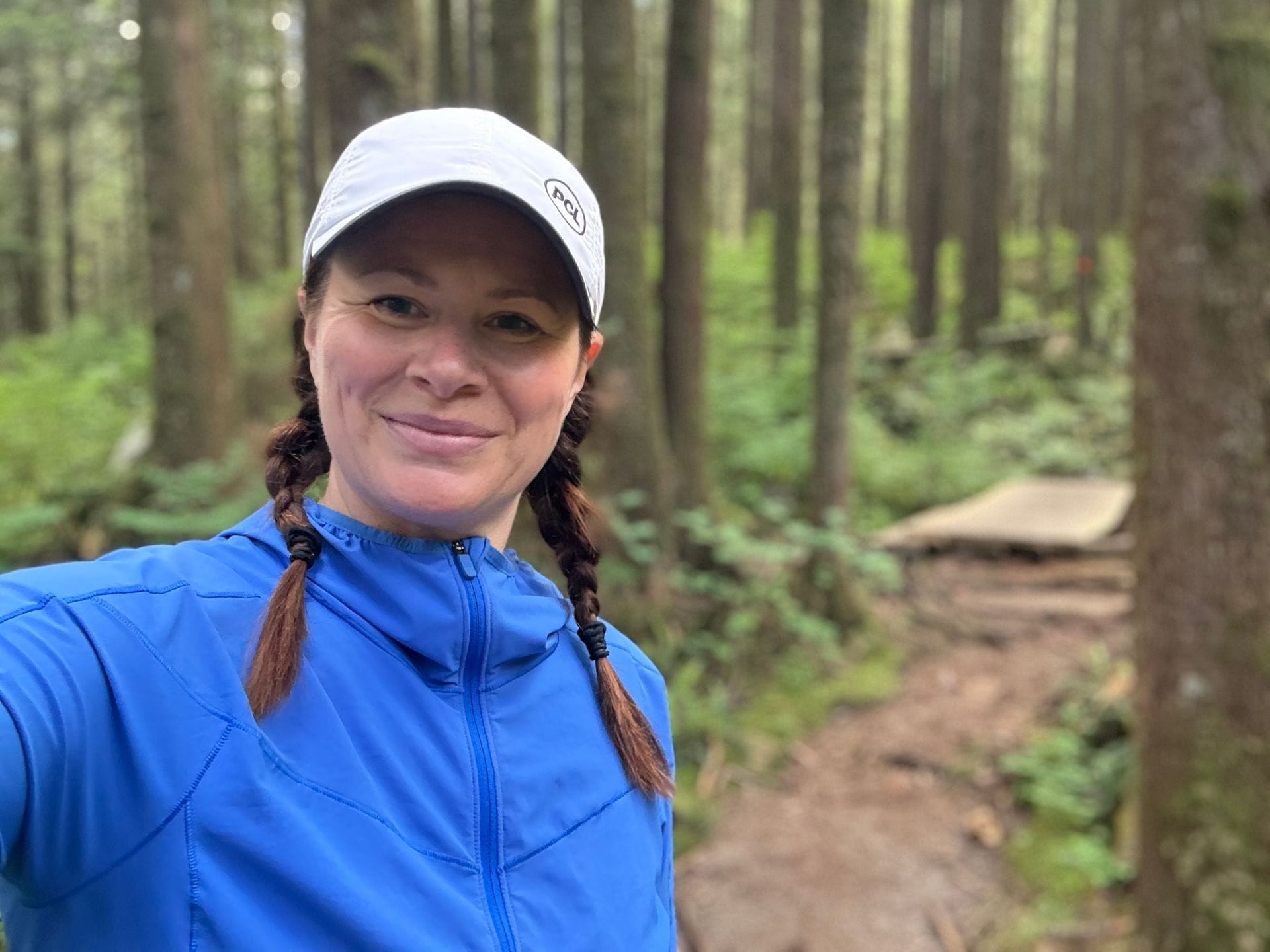
One of the best things about this trip is that the hike to Widgeon Creek Falls offers two distinct route options, so you can choose based on your group’s mobility, time, and interests.
The road route: An old logging road (Quarry Road) runs more directly to the falls. It’s wider, flatter, and faster going — a good option if you’re short on time or have a wider range of abilities in your group.
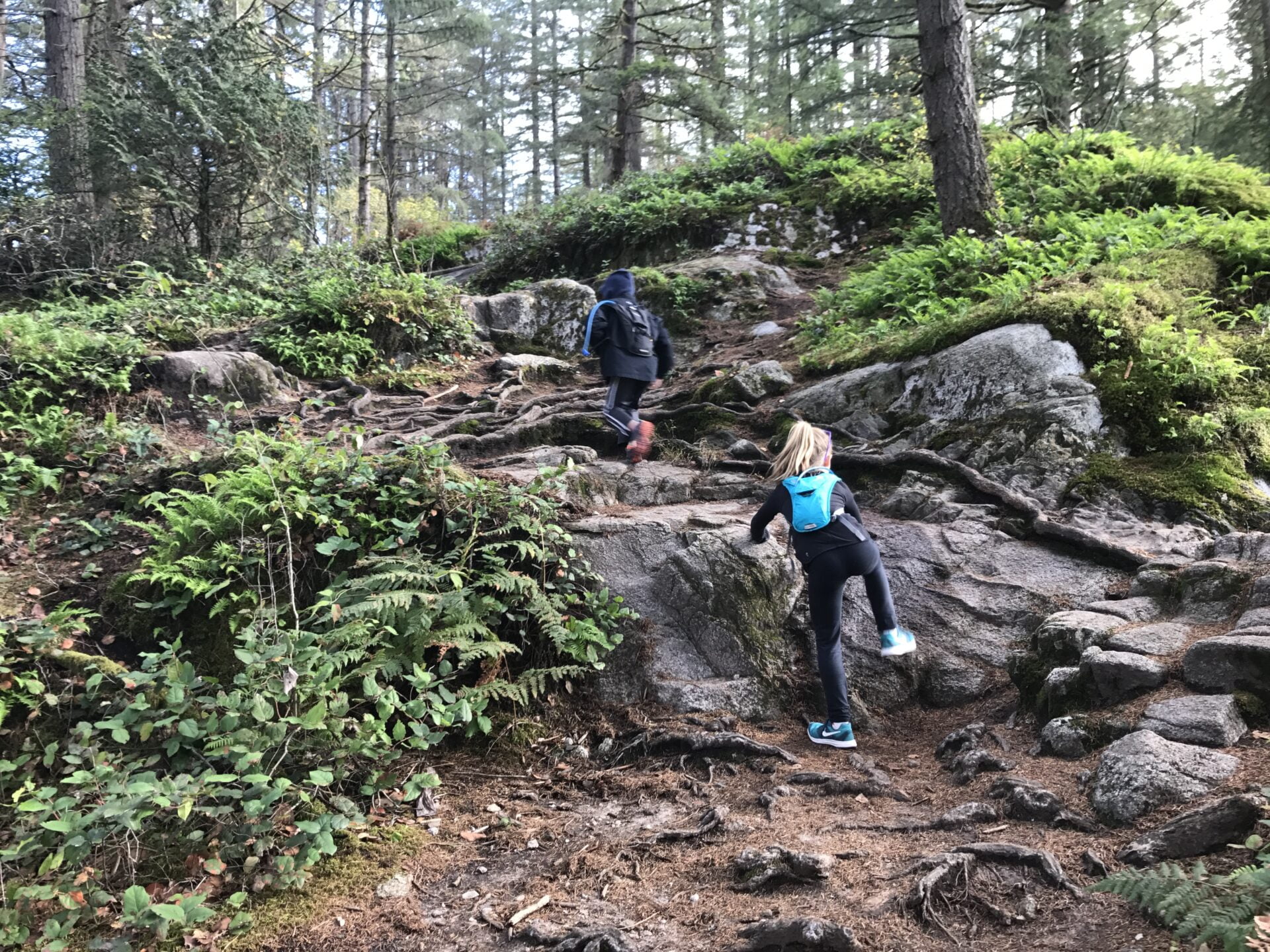
The river trail: A more traditional hiking trail runs alongside the river for a more scenic, immersive walk. Expect some uneven terrain — roots, rocks, and logs — with a handful of small bridges crossing the water. There’s a little elevation change, but nothing severe. This is the route we chose, and it was beautiful.
Either way, plan for about 3 km each way (6 km total). Our group covered it in just under thirty minutes one way, though your pace will vary depending on your group and which route you take.
Widgeon Creek Falls: Look, Don’t Touch
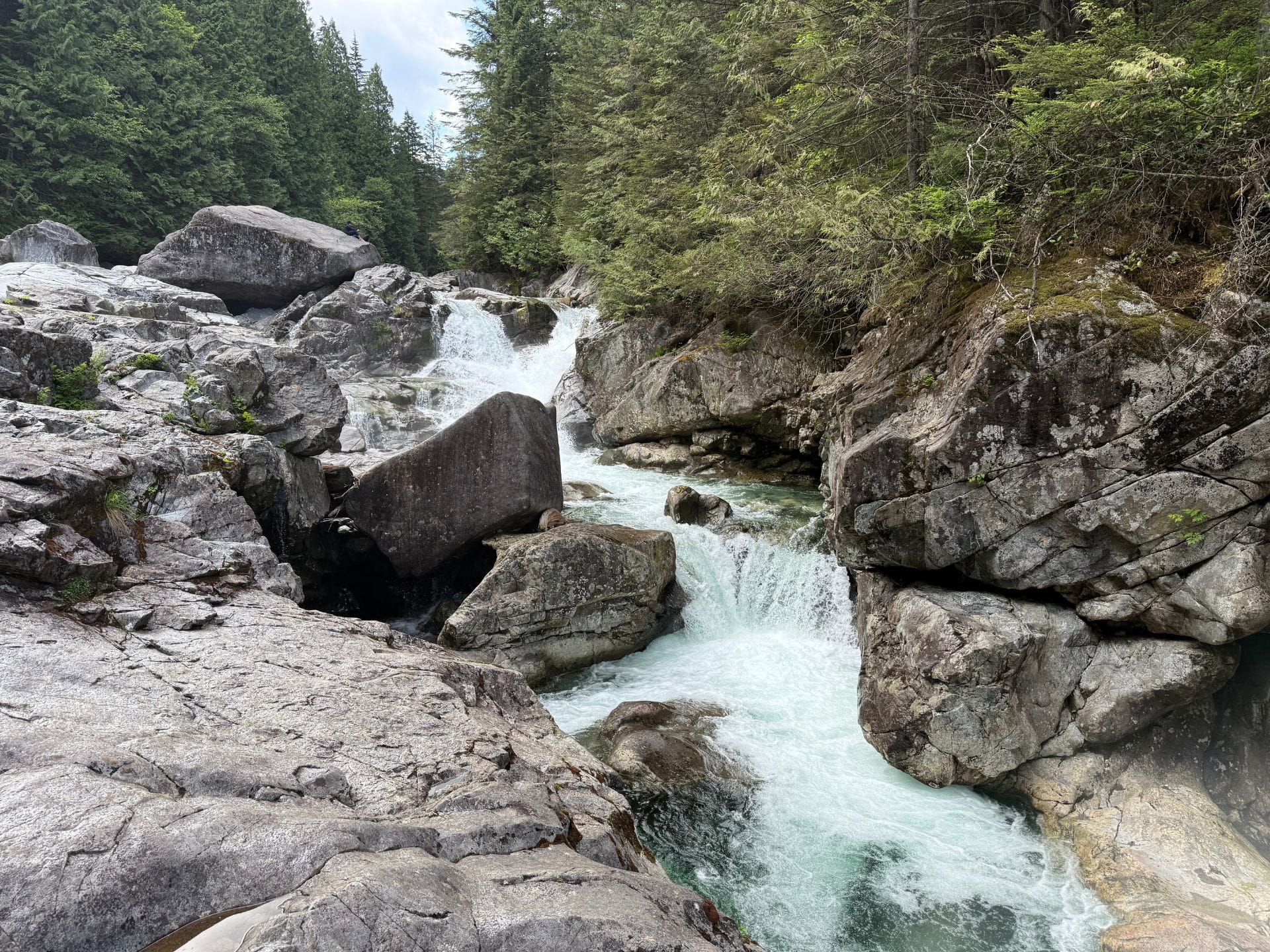
Widgeon Creek Falls is genuinely beautiful — turquoise pools beneath the falls, multiple levels of cascading water, and plenty of flat rocks where you can sit and take it all in. We were there with a strong flow of water, and the colour of those pools is unforgettable.
This is an important safety note: the rocks around the falls can be very slippery, and the current is genuinely dangerous. There are posted signs warning visitors of exactly that. Enjoy the scenery from a safe distance, take your photos, and resist the urge to get close to the edge or into the water near the falls themselves.
Because we hadn’t started early enough in the day, we had to head back sooner than we wanted. If you can manage your timing better than we did, this is a fantastic spot to pack a lunch and enjoy the beautiful scenery. We’ve also heard there’s a lake (Widgeon Lake) further up beyond the falls. We haven’t done that hike ourselves, so we can’t speak to it firsthand — trail reports suggest it’s a significant additional trek (roughly another 12 km round trip with real elevation gain), so if you’re curious, research it thoroughly before attempting it as an extension to this already full day.
The Return Journey: Respect the Tide
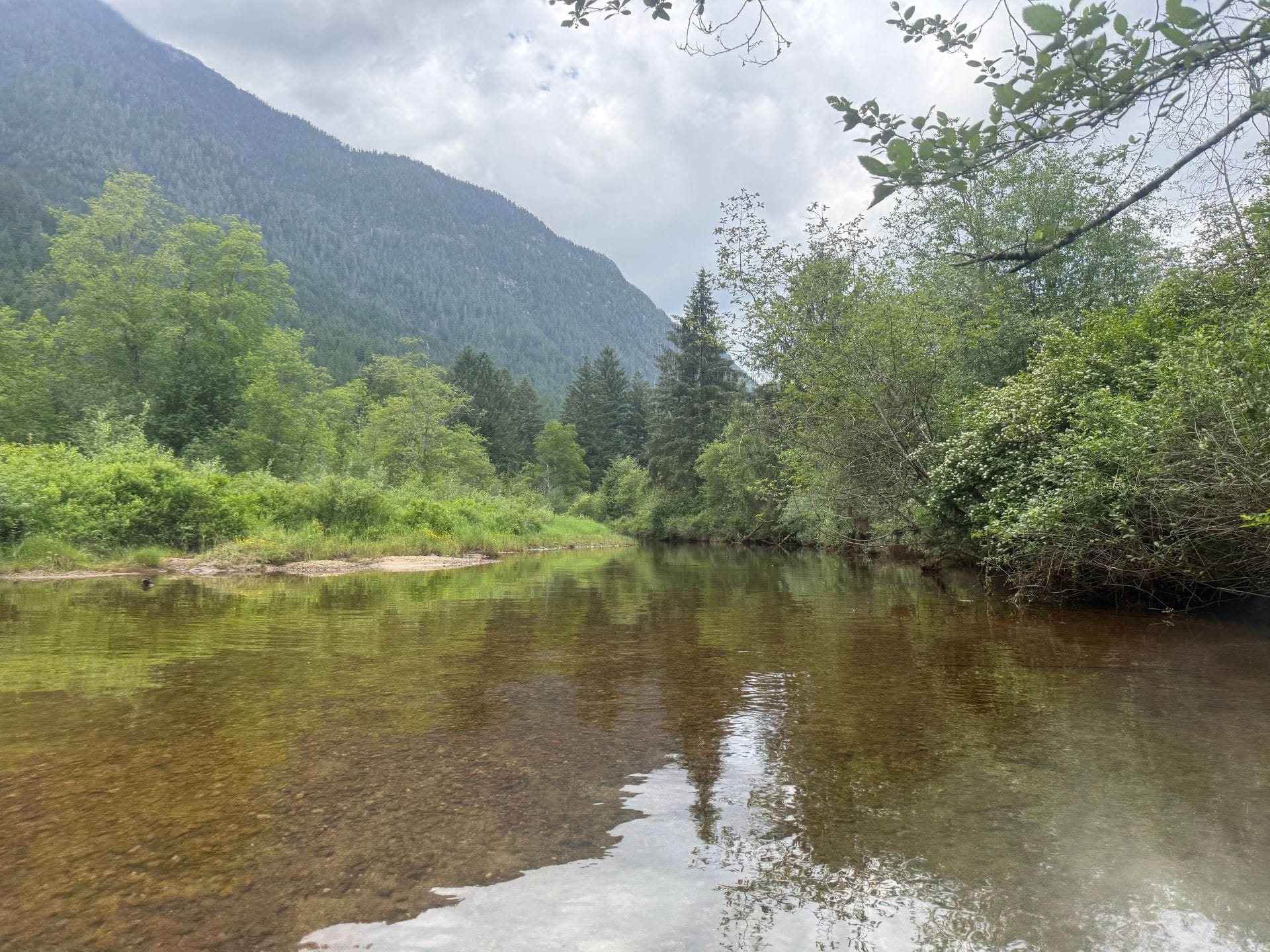
We took the road route back down to save time, then loaded back into our canoes and kayaks for the paddle out. By this point in the day, the tide was clearly transitioning, and several paddlers we crossed paths with were timing their own departure around exactly that shift.
We hadn’t paid quite as much attention to the tide as we should have going in. Fortunately, it didn’t cause us serious trouble, but we hit a few very shallow spots where the water was only inches deep beneath the canoe — a situation that could become genuinely problematic with a bigger tidal swing. That return crossing across the Pitt River, which had taken about ten easy minutes that morning, took a hard twenty minutes of paddling against the current on the way back. Lesson learned, and exactly why we wanted to write this article: plan around the tide, and don’t assume the conditions you launched in will still be there when you return.
Why This Trip Is Worth the Effort
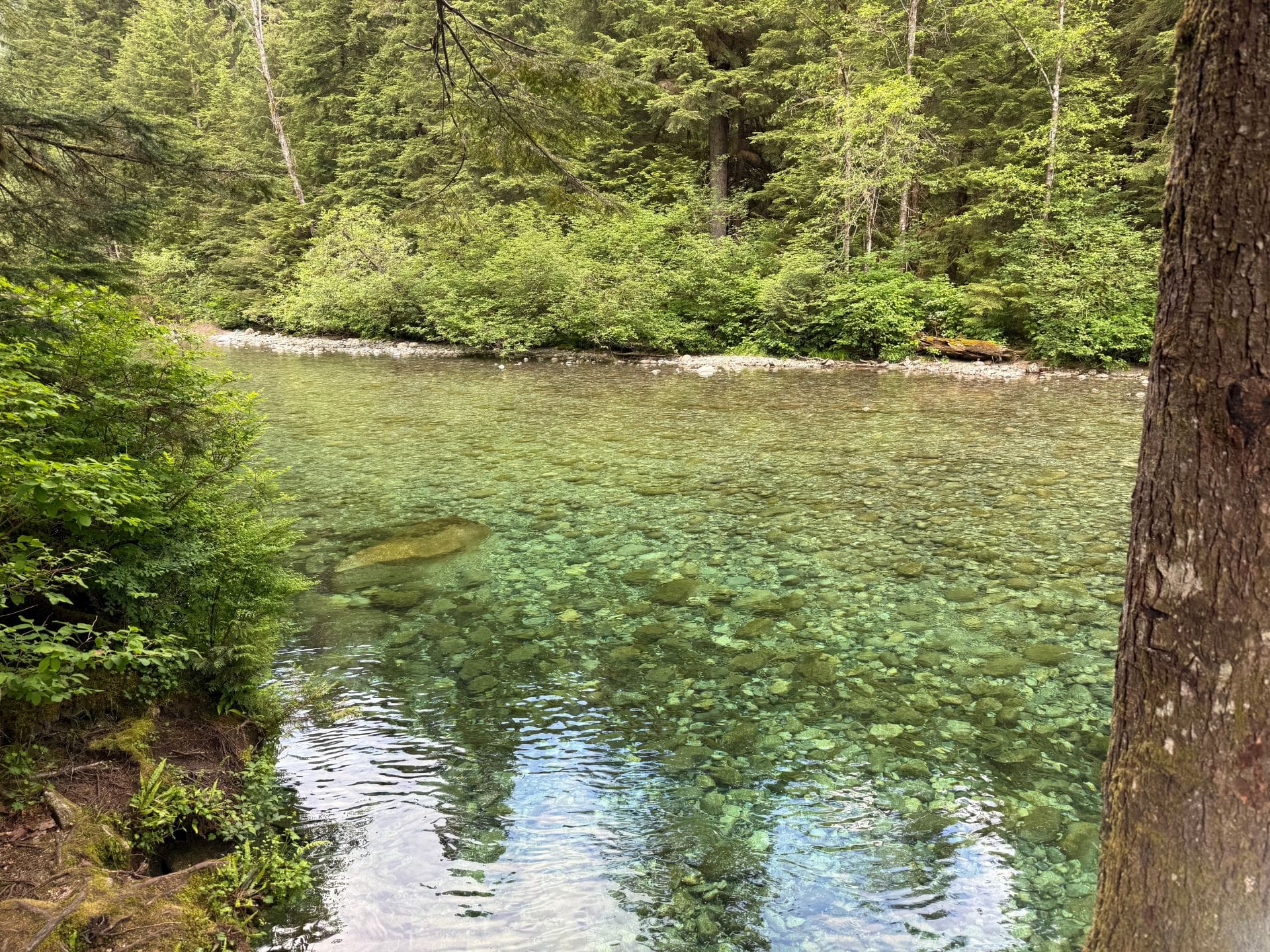
Despite the long day and the lessons learned along the way, this trip was 100% worth it. My only regret is not having done it sooner. Sharing this experience with a group of teenagers, surrounded by scenery this dramatic and this close to home, was genuinely surprising — in the best way.
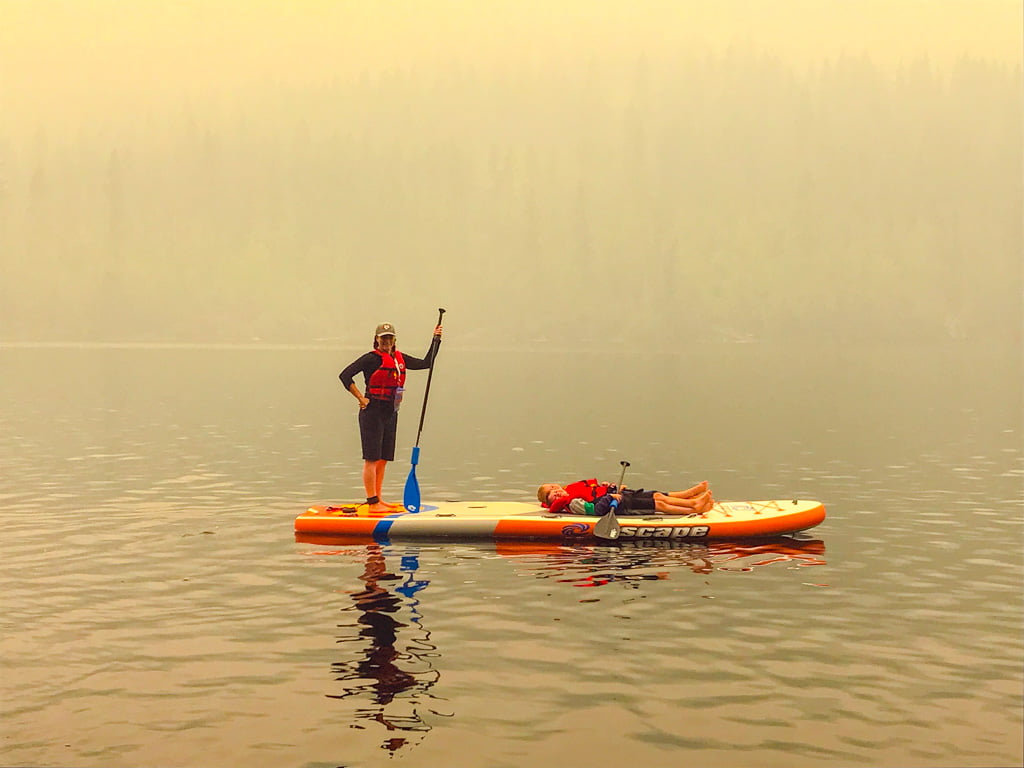
What struck me most was how accessible this adventure is for such a wide range of people. We saw preschoolers paddling with their parents and senior couples out for a quiet day on the water. Whether you’re bringing a group of energetic teens, a young family, or just a few friends looking for a proper adventure close to Vancouver, Widgeon Creek delivers a genuinely wild experience without requiring a long drive or technical paddling skills.
It’s rare to find a place this special this close to home. Once you’ve done it, you’ll understand exactly why I couldn’t stop telling everyone about it.
Before You Go: Quick Planning Checklist
- Check tide tables in advance, and plan your paddle in and out around high tide where possible
- Start early in the day — earlier than you think you need to — to avoid rushing or being caught by shifting tides or fading daylight
- Bring lots of food and water, there is no water provided at the campsite.
- Pack out every piece of garbage; there are no waste facilities at the campground
- Store all food in the provided bear caches, never in your boat or tent (read our full bear safe article here)
- Wear footwear you don’t mind getting wet for both the paddle and the hike
- If camping overnight, arrive early; sites are first-come, first-served with no reservations
- Watch for slippery rocks and strong current at Widgeon Creek Falls — view from a safe distance